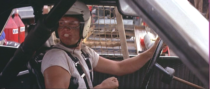
Junior Jackson (Jeff Bridges) was a bootlegger who drove the moonshine his father (Art Lund) and brother Wayne (Gary Busey) made in their still in the woods across the state to supply their customers, and such was his skill with driving he was very rarely caught. But his luck could not last forever, and after the family had made a name for themselves in that field of illegality the police were soon on their trail. Soon Jackson Senior was arrested and placed behind bars, so how could they pay for his legal bills to get him out again? How about Junior uses his skills in other ways?
This was sort of the story of NASCAR champion Junior Johnson, about whom Tom Wolfe had penned articles on back in the sixties and someone thought that would make a good basis for a film. Although it never went onto huge business, frequent television showings and star Bridges' subsequent wavering between mainstream respect and cult adulation ensured a following, certainly in Britain where it was a regular late night TV broadcast for many decades, not a bad way to build up an appreciation of a film that may not have been too taxing to watch, especially at that time of the evening, but was no pushover either.
It should be noted that the end result was only loosely based on Johnson's career, even though he was hired as a consultant, which was possibly why they changed the name to Jackson in the writing process. Nevertheless, it stuck fairly closely to some aspects of his biography while updating them to the seventies: he genuinely was a bootlegger, although he went to prison as well as his father, and he did do well on the racing circuit, although he didn't have to join an established racing team before winning his first competition. As if aware that nobody would much care about that as long as the action kept flowing, director Lamont Johnson concentrated on driving for most of this.
That's not to say there was no character development, in spite of it leaning rather closer to the rebel ideal of countless American movies of then and of now, for that matter. Bridges inhabited this role with ease, not simply relying on his natural charisma and suggesting depth beneath the usual good old boy business that could have marked this out as yet another cars and girls flick of the seventies. We see Junior grow up as life throws more experiences his way, starting out brash and independent and ending up more worldly wise if not a little disillusioned, not because he is no champion, he does very well in his profession, but because the people along the way have foiled various expectations.
One of those people is Marge (Valerie Perrine, perfectly cast), who Junior thinks is the woman he has been waiting for, and turns out to be a basic sports groupie who enjoys his company but then again enjoys the company of plenty of drivers. She sums up the letdown Junior goes through as never mind how many races he wins, that dissatisfaction haunts him, whether it's part of his background and class or whether getting as far as he does cannot truly ever be far enough. Not to get too political, of course, The Last American Hero remained a fairly typical hard driving movie, and Johnson displayed a real talent for the track sequences which were consistently absorbing. Assisting was a supporting cast of high calibre, with William Smith as a rival in driving and in love, Ned Beatty giving Junior his break, and Ed Lauter as the overbearing team owner who he has to reach a compromise with. If it was on the ordinary side as far as any great insight went, there was enough to prove its worth otherwise. Music by Charles Fox.