Kojiro Samukawa (Akira Kobayashi) used to be a big deal in his yakuza family, though that was some time ago before he was convicted of crimes connected to his gangster activity and jailed for a few years. But today he is released, and as he steps out of the gates to freedom he takes in the sunshine, the air and the sound of buzzing insects: it’s almost oppressive, but just as he is about to head off home someone walks up to him, Hino (Jô Shishido), who was part of the main rival to his clan way back when. He seems polite enough, but soon reveals why he showed up, pulling a blade on Jiro and attacking him for murdering his colleague; only the pleading of Hino’s moll stops the situation escalating…
Retaliation, or Shima wa moratta if you were Japanese, was one of umpteen yakuza thrillers released during the nineteen-sixties and seventies, a period when if you were in Japan and seeking action-packed entertainment you could simply visit a cinema and take your pick of tough guy actors beating each other up, stabbing or shooting their way through their movies in the most macho manner possible. Not that this stopped any emotional content getting through, as a defining element was how maudlin these men of violence could become if things were not going their way, and so it was with the protagonist here when the shenanigans he has instigated lead up to innocent lives being lost.
This was written and directed by Yasuharu Hasebe, something of an intellectual in his field but not above getting gritty or indeed sleazy should the chance allow. He was reunited with his star Shishido here, one of the actors most associated with the yakuza genre, though in this case taking more of a supporting role, call it a second lead at the most as he was pitted against Kobayashi in a manner suggesting grudges in this milieu were never really laid to rest until the participants were actually laid to rest. Jiro, on returning to his old boss, finds the gang have more or less disbanded, therefore needs work and decides to take the offer of one of their rivals to take up a post corralling a team who will oversee a land grab.
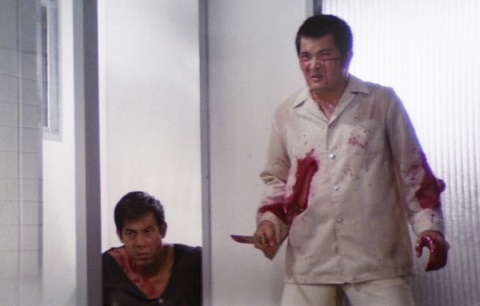
That the land has already been grabbed, by ordinary citizens, doesn’t appear to bother them, yet it underlines the theme that these gangsters were essentially businessmen whose tactics were illegal, and since we hardly see anyone in that capacity who is on the level it comes across as the whole of Japanese society was prey to these ne’erdowells. As was customary, bursts of action were never far away, with Hasebe making something of a recurring image of the white shirt sporting bloodstains to illustrate this disparity between the attempts at respectability and the actual brutality that lurks beneath that surface, bubbling up in harrowing fashion as the cast were systematically pared away until there were a couple of men left standing.
Needless to say, women had a raw deal here, raped and beaten, with the most famous female performer here Meiko Kaji, Lady Snowblood herself, landed with a thankless role as the daughter of a landowner who we first see being sexually assaulted as a message of warning to her father, then tries to romance Jiro only to find getting close to these yakuza merely leads to an unpleasant resolution, though at least she provided the trigger for him to be very sad and seek vengeance, as expected. Hasebe shot his action sequences in a chaotic fashion, with the camera peering through scenery and swaying around to emphasise the anything goes nature of these fighting free for alls. However, that applied to the storyline as well, with the ins and outs of the despicable business set ups so complex and convoluted that it might well take all the viewer’s concentration to follow what the hell was going on. Still, even with one eye on the details of plot you pretty much got the idea for its feuding wasn’t too far removed from its contemporaries, not at all. Jangly, twangy music by Hajime Kaburagi.