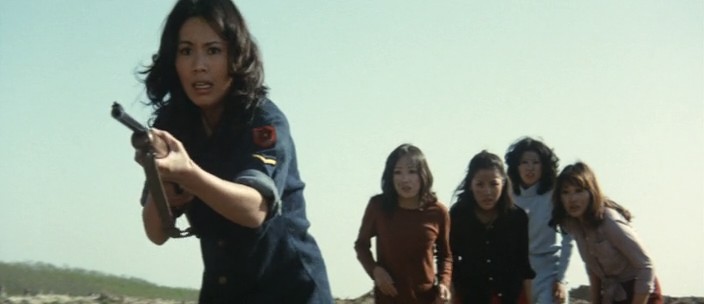
Caught in yet another escape attempt, delinquent teen Ruriko (gorgeous, pouting Miki Sugimoto) is hauled back to reform school just as new girl Mina (Yuko Kano) lands behind bars after killing a yakuza for her corrupt politician lover. When the warden ensures all the inmates suffer as result of Ruriko's bad behaviour, a brutal cat-fight erupts while the guards stand idly by. Later the girls get their own back by embarrassing the warden during a visit from the board of education. In revenge the warden withholds food and ensures every girl due for release remains for another month. This proves too much to bear for poor Kyoko (Hiroko Isayama) who has a baby back home. So together with Mina and feisty fourteen year olds Maki (Rika Sudo) and Yuki (Fujika Omori), Kyoko joins Ruriko for an audacious jail break.
For the fifth film in the Sukeban series of sexploitation-action-thrillers Toei Films came up with a plot less focused on delinquent schoolgirl antics than in line with the women-in-prison craze sweeping international exploitation cinema at the time. The sleazy sub-genre caught on in the wake of Roger Corman's trailblazing New World production The Big Doll House (1971) and spawned Asian imitators like the Shaw Brothers effort Bamboo House of Dolls (1973). Certain fans rate Escape from Reform School among the best entries in the series on the strength of its downbeat tone and comparative lack of humour though it comes down to personal taste. The film is not as playful nor imaginative as Norifumi Suzuki's contributions, especially Sukeban: Girl Boss Guerilla (1972), and despite sharing remarkable plot and thematic similarities with another jailbreak-themed Toei pinky violence gem Female Prisoner Scorpion: Jailhouse 41 (1972) is more prosaic by comparison. On the other hand Escape from Reform School is undeniably more consistent in tone than Suzuki's Sukeban films, which might appeal more to English fans less enamoured with the usual wacky sub-plots, and exhibits a pleasing empathy with the plight of downtrodden social outsiders for which Sadao Nakajima was well known.
In Japan Nakajima is famed for crafting among the most ambitious gangster epics of all time, The Don of Japan (1978) starring the great Toshirô Mifune and the popular Mamushi Brothers series with yakuza icon Bunta Sugawara. However he dabbled in everything from the gruelling Christina Lindberg sex "comedy" Journey to Japan (1973), breakneck chase movie Crazy Beast (1976) and a science fiction actioner, Cyber Ninja (1988) co-directed with Keita Amemiya. Despite abundant sex and a fair amount of suspense and excitement (notably the jailbreak and the explosive finale) Nakajima serves up fewer sleazy set-pieces and more social satire. He spotlights the corruption and indifference of the reform school wardens, policemen and politicians and portrays Ruriko's attempt to create a fairer, more honest alternative society among her girls even though her cockeyed ideals crumble in the face of tensions in the group and the oppressive forces of so-called law and order. Sultry, husky-voiced Miki Sugimoto commands the screen as badass babe Ruriko although Fujika Omori is notable as jailbait troublemaker Yuki and Hiroko Isayama ably shoulders the most affecting sub-plot.
After the jail break the film diverges into several sub-plots as Kiyoko returns home to a tragic discovery, Ruriko takes up with an armed robber (series regular Tsunehiko Watase) who becomes her lover, Maki and Yuki get into various scrapes and Mina catches her sugar daddy in bed with another woman. Things grow increasingly convoluted and ramshackle. Nevertheless Escape from Reform School does rank among the best acted pinky violence films as sparky chemistry lends a palpable charge to the love scenes between Watase and Sugimoto. The finale is angry, action packed and suitably downbeat. Happily Ruriko remains defiant to the end although this was the last series outing for Miki Sugimoto. Remarkably she went on to become a nursery school teacher.