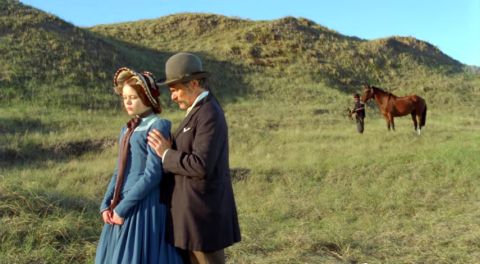
There was talk a couple of centuries ago of a place of riches in the most isolated region of South America, some thought it was a myth, but others believed it wholeheartedly, not that there were ever any reliable reports of anyone finding it, and not that this stopped the dedicated from searching for it. Back then, a small band of officials and soldiers were on the coastline of that wilderness looking for a military man who had gone rogue, taking his dog with him: Gunnar Dinesen (Viggo Mortensen) was in the party with his teenage daughter Ingeborg (Viilbjørk Malling Agger) who also had a liking for dogs. As they sit by the shore, she tells her father her dearest wish would be to have a dog that followed her everywhere...
How about a dad that followed her everywhere instead? That's what happened in this inscrutable but beautiful to look at drama, which could have doubled as a Western only transplanted to the countryside of Argentina, actually filmed in some incredibly remote places that have likely never been captured before for a film such as this. Indeed, so striking was that scenery that you could simply spend the whole movie drinking it in with your eyes and not bother trying to work out what director Lisandro Alonso was getting at. Beginning at the edge of the land overlooking the sea, the plot, such as it was, steadily travelled inland until the lead character was setting out into what looked like a lunar surface.
Mortensen played that lead in one of those instances of a star getting away from the major budgeted movies that made his name and letting his hair down in an effort that would have nowhere near the audiences those would, but generated a more artistic satisfaction for his thespian soul. The best thing about that was his starpower being enough for his fans to seek this out, curious about his motives for appearing in it - and not only appearing, by all accounts he had plenty of input in the rest of the creative angles into the bargain, including the music soundtrack. Whether they would come away content, or at least happy for the object of their affection that he was indulging in a piece he truly enjoyed, was a more moot point.
Well, if Viggo was happy you'd like to think we'd all be happy for him, but quite what this was supposed to be about aside from a man's search for his daughter in the nineteenth century location of South America was going to leave everyone but the most dedicated viewer baffled, particularly when it went off in what appeared to be a completely different direction for its coda. What we could ascertain was that Ingeborg, uninterested in the search for the strange-sounding quarry these men are tracking down, forges her own path away from them along with the lieutenant she has fallen for romantically, slipping away in the night while her father is asleep in their tent. He has to hunt her instead from now on, fretting that there too many potential dangers out there for him to expect her to return of her own accord.
It's safe to say there was not a cast of thousands featured in Jauja, with long scenes of Mortensen negotiating the lovely but not exactly welcoming landscape barely broken by the occasional line of dialogue, or more importantly the appearance of another person, which included the occasional murderous Indian to place Dinesen in peril (and presumably Ingeborg too), but also the more surreal sight of someone's pet dog. The presence of pooches seemed very important, that uncomplicated dedication to one person both this wolfhound Dinesen meets and the man himself exhibit. The dog's owner is a little old lady, Danish acting legend Ghita Nørby who merely confuses matters by apparently living in a cave since her husband died, but also perhaps being some incarnation of Ingeborg from the future. Which is what we end up with anyway, but if you've been well and truly discombobulated by the lack of overt logic to the plot, the compensations were there in that stunning imagery and a sly sense of humour peeking through the oddity.