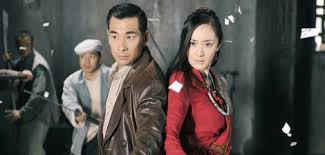
China, 1911. American educated archaeologist Professor Tang Yunlong (Zhao Wen-Zhou) and his young martial arts gifted daughter Ning (Xu Jiao) steal an ancient scroll from unscrupulous gangster Paul Chen (Shaun Tam). The scroll points the way to seven treasures hidden at a Taoist temple atop Wu Dang mountain that Tang is determined to steal for his own secret reasons. Feisty kung fu thief Tian Xin (Yang Mi) also sneaks onto Wu Dang posing as a combatant in the martial arts tournament so she can steal a sacred sword she claims belongs to her family. While Prof. Tang and Tian Xin fight, flirt and eventually team up to unearth the treasure, Ning attracts romantic attention from Shui Heyi (Fan Siu-Wong), a stoic monk competing to earn a miracle cure for his crippled mother (Pau Hei-Ching). Meanwhile right hand to the abbot Bai Long (Dennis To) endeavours to safeguard the seven treasures whilst secretly hatching his own evil plans.
Although it starts like yet another Raiders of the Lost Ark (1981) clone, Wu Dang is really just a pleasant throwback to the old school kung fu adventure films that proliferated Hong Kong cinema screens back in the Eighties and Nineties. Films like Magnificent Warriors (1987) or even Jackie Chan's classic Armour of God (1986). The plot might be nothing to write home about but the protagonists are so likeable, the mist-drenched mountain scenery so beautifully photographed (by Cheung Tung-Leung) and the action sequences so thrillingly realized most HK film fanatics should be able to set aside their critical qualms and enjoy the fun. Patrick Leung was a protégé of John Woo and served as his assistant director for many years. His initial action thrillers, female assassin yarn Beyond Hypothermia (1996) and boxing drama Somebody Up There Likes Me (1996) (ripping off its title from the Paul Newman classic) failed to impress critics or audiences, but he found success with a run of comedies including La Brassiere (2001), Mighty Baby (2002) and the well-received Simply Actors (2007). Many of the set-pieces play like a kind of greatest hits package for veteran choreographer and occasional actor-director Corey Yuen Kwai, including the river raft sequence where Tang battles a bunch of sword-wielding maidens. At the same time his poetically executed action reveal more character information than the threadbare script. Take for example the wonderful fight-cum-dance sequence where Tang twirls Tian Xin like he is Fred Astaire and she is Ginger Rogers, flattening bad guys whilst falling in love.
Zhao Wen-Zhou, a martial arts star who never received his due back when he was making truly remarkable films with Tsui Hark like Green Snake (1993) and The Blade (1996), proves he has lost none of his athleticism and grace. He exudes quiet charisma and is suitably dashing as the bereaved scientist willing to sacrifice everything for his only daughter. The father-daughter relationship proves the one novel element in an otherwise familiar story. It adds a pleasingly poignant dimension thanks largely to Zhao's charming heart-to-heart moments with peppy and likeable Hu Jiao, the maturing child star who found fame convincingly playing a little boy in Stephen Chow Sing-Chi's sci-fi comedy CJ7 (2008). As far as the fight scenes go Jiao acquits herself well in close-ups and medium shots but in other sequences is rather obviously doubled. Yet she is such an engaging actress, especially when the plot takes a turn for the tragic, one can't quibble too much. Also excellent is Yang Mi as the deceptively dainty yet tough as nails thief Tian Xin who lands most of the funniest sequences and etches a compelling and sympathetic anti-heroine.
On the other hand the plot twist establishing the very young Hu Jiao as love interest to a clearly middle-aged Fan Siu-Wong, star of gore fans' favourite The Story of Ricky (1989), is questionable to say the least. Not only is simple nice guy Shui Heyi the most colourless, least interesting character, there is something faintly unsettling about how eager his mother is about getting aspiring scientist Tian Xin out of her western clothes and into more traditional role as a sweet but subservient child bride in Mandarin garb. The film does have a slightly conservative streak opening as it does with Tang declaring China needs to adapt to the modern world and stop being so inflexible yet concluding with him admitting science does not know everything. In spite of these missteps and a teary finale that rather overdoes the see-saw effect from tragic to happy, the climax is genuinely kick-ass as the villain uses the seven treasures to transform himself into a glowing super-being as Tang struggles to take him down.