Admittedly there is something a bit rich about making a sequel to something that sold itself as "definitive." Yet the fact remains the documentary featured on the original three-disc set, Video Nasties: Moral Panic, Censorship & Videotape (2010) ended on a frustratingly inconclusive note when there was so much more of the story to tell. Happily this superior sequel more than fills the gap. It is a meatier film that aside from shining a light upon an astonishingly repressive period, not simply in horror fandom but social history, also proves more thought-provoking challenging the preconceptions of both the censorious and libertarian.
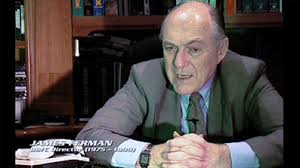
Opening with a replay of academic Martin Barker's impassioned summation of the previous film ("Critical voices have to care about history") Video Nasties The Definitive Guide 2: Draconian Days covers the extensive period from 1984 to 1999 when British censorship laws were stricter than any in Europe. At the heart of this story looms James Ferman, then-head of the British Board of Film Classification, a contentious yet, as the documentary illustrates, complex figure. A former filmmaker himself, having directed for Canadian television (by all accounts, badly), Ferman saw himself as a sympathetic mediator between artists wary of censorship and morally indignant public officials outraged at the "excesses" of modern film. Film critic and FrightFest organizer Alan Jones recounts one memorable incident where Ferman screened for BBFC staff a compilation reel of all the grisliest scenes from various slasher films, Italian cannibal gut-munchers and sundry atrocities that had the staff apoplectic and even Jones reeling until he contemplated the trickery of the censor. On the one hand, Ferman contended that violent horror films had any impact on violent individuals and challenged a campaign led by Conservative MP David Alton for more draconian censorship. Yet he was not above taking a scissor to 35mm prints and had a peculiar bee in his bonnet about The Exorcist (1973), arguably among the most moralistic of horror films yet banned from video release for almost thirty years. Perhaps most problematically, as the film illustrates, Ferman was operating from a particularly smug elitist viewpoint wherein the educated middle class knew what was best for the great unwashed.
However, director Jake West plays fair by allowing articulate representatives from the BBFC to argue their cause. Especially fascinating are the arguments put forth by Carol Topolski, whose background in psychotherapy and counselling victims of domestic abuse led to her taking an interest in the depiction of violence against women on screen. Topolski recounts how a screening of The New York Ripper (1982), a film even Lucio Fulci fans have a hard time defending, left her quietly weeping in the cinema. West inter-cuts this with the infamous razor through nipples and broken glass in vagina shots from Daniela Doria's grisly demise, cheekily titillating gore-hounds even as it sort of proves Topolski's point. Thereafter the documentary details the subsequent history of the British media linking real-life atrocities with violent movies, from the supposed parallels between Michael Ryan's killing spree in Hungerford and First Blood (1982) to contentious theory that the comparatively innocuous Child's Play 3 (1991) was somehow the impetus behind the senseless murder of little Jamie Bulger.
Oddly the documentary misses a trick by neglecting the ridiculous furor over David Cronenberg's auto-erotic opus Crash (1996), arguably the most challenging and nuanced victim of the tabloid witch-hunt and surely a worthier rallying cause than garbage like New York Ripper. Topically, in light of recent events, the film also touches on blasphemy laws contrasting the censors' treatment of Nigel Wingrove's low-budget nunsploitation opus Visions of Ecstasy (1988) and Martin Scorsese's more mainstream, though no less controversial The Last Temptation of Christ (1988). We also learn how an off-the-cuff remark from the judge presiding over the Bulger trial sparked off what was essentially the second act in the Video Nasties scare culminating in the infamous headline from The Sun: "For the Sake of All Our Kids... Burn Your Video Nasties", an example of irresponsible tabloid scare-mongering far more contemptible and frightening than any splatter movie.
The unforeseen knock-on effect from this climate of strict censorship was the rise of the underground horror scene. The film briefly veers into nostalgia depicting the rise of homemade fan zines and film festivals such as Jones' legendary Shock Around the Clock at the Scala in Camden, bootleg tapes and the smuggling of uncut films from Amsterdam. Perhaps the most eye-opening aspect of the documentary, at least for younger horror fans, are descriptions of the police's inexplicable crackdown on horror fandom with sobering stories of films being seized and fans held in custody amidst the spurious correlation drawn between horror enthusiasts and pedophiles! Have times changed for the better? On one level yes but much like the first documentary the film ends on a problematic lament that accessibility has robbed horror fans of the thrill of the illicit, suggesting both gore-hounds and the censorious are equally indecisive about what they want.
Nucleus Films' excellent three-disc set comes of course with trailers for all 82 films that fell afoul of the Director of Public Prosecutions' "Section Three" list complete with introductions from among others film critics Kim Newman and Alan Jones.