In 1975 the bombing of Cambodia opened the door to the Khmer Rouge, a revolutionary organisation of nationalists who were determined to bring down what they regarded as the elite in their society and replace them with a status quo of Communism as they saw fit. Rithy Panh was barely into his teens when this occurred, and witnessed his family go from a middle class and comfortable existence to one of abject destitution as the new system was forced into place. As the capital Phnom Penh fell in April, the citizens were rounded up and left the city almost deserted as the population were taken to the countryside, and Panh began to cling onto his memories of the happiness before the revolution as all around him turned to Hell...
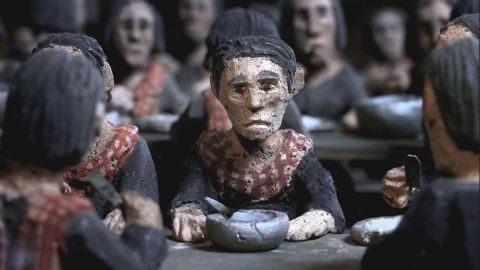
The problem the director found with making a film about the disaster in Cambodia in the mid-nineteen-seventies was that most of the existing footage of that time was the propaganda left over from the reign of the Khmer Rouge, which understandably painted a less than balanced picture. So Panh hit upon a novel solution: he would recreate his memories of the era with small clay figures on dioramas where the missing picture, missing pictures really, was going to leave a gap in his narrative. Back when this was unfolding, the images on the news from Cambodia, renamed Kampuchea for the period, were horrifying the world, which did make you wonder what had happened to those clips?
You did not wish to criticise such a personal account, but Panh's claim that he could not find the relevant footage was perhaps not as accurate as it might have been, surely he could have raided some of the news archives around the planet for what he needed, even if the most personal image, the picture of the title, was not going to turn up? Nevertheless, what you were left with was an oddly childish depiction of a dreadful state of affairs; the figures were not animated in any way (aside from an absurd-looking sequence where the Panh stand-in soars above the other models in a cheap special effect), but the renderings were somewhere between crude and detailed enough to be evocative, which certainly lent the experience a novelty.
Though you could question whether novelty was what the story needed, as watching the little models staged to act out the horrors the director recalled had a curiously distancing effect rather than bringing you closer to the suffering. You could understand what had happened, but instead of simmering with outrage the monotonous voiceover and slow pans across the model scenes had a soothing influence, which was not the way you would expect a tale of this ghastliness should have been approached. It could be that this was unintentional, and by keeping the mood low key, subtle even, Panh was casting a spell over the audience to slip the information he was imparting into the mind of the viewer and have his memories form part of their memories also.
Yet this passivity was only occasionally jolted out of its murmuring by unpleasant realisations the narrator offered, genuinely awful truths about living under Pol Pot, from starvation to the murder of anyone who dared complain, or even looked as if they had the intelligence to ask awkward questions. Questions like, if you watch us every day like hawks, how can you not perceive of the despair you are causing, not understand the dire situation you have created? Of course they did, but Panh did not provide that answer, probably because he never received one directly and had he asked the authorities would have crushed him, but it's part of the needling quality The Missing Picture could have done with more of rather than droning on; not that it was necessary for sensationalism in a tale all too brutal as it was, but the calm was less unsettling than it was muffling. The story of the Khmer Rouge is one of ideology gone horribly wrong as this film readily points out, one of those awful warnings history throws up all too often, but this personal effort might not have done it justice. Music by Marc Marder.