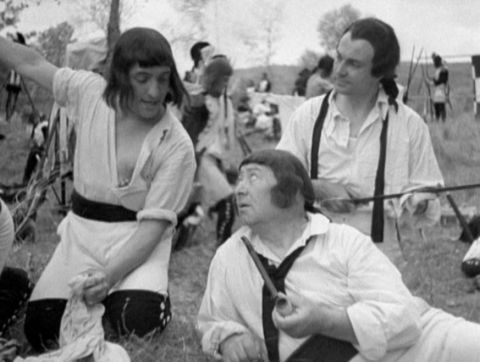
France 1789 and there are rumblings of revolution in the air, so when one of the Dukes visits King Louis XVI (Pierre Renoir) in his palace, the news he has to impart is far from beneficial to the aristocracy who have sustained the status quo of keeping the poor down in their perceived place for too long. The landowners see fit to enforce petty rules with serious consequences should they be crossed, which leaves the peasants at their mercy, but now with the storming of the Bastille prison in the heart of Paris, it appears the tide is turning and those cruel noblemen will no longer have it all their own way. However, a revolution does not necessarily happen overnight, and there is a long road ahead for the lower classes...
La Marseillaise was Jean Renoir's tribute to both the revolutionaries of two centuries before and the Popular Front movement which had taken Communist values to the government of France in a display of left wing patriotism that in theory demonstrated the nation could join together in unity for a cause they all could get behind. Aware their neighbours to the East were making fascist moves towards extending their influence, this was an important statement to be emphasising, but Renoir had hoped his epic would be made and released in 1936, so when the funding didn't arrive to complete the movie until two years later, there was a sense that the party was over and he had shown up too late to make a difference.
With the future looking grim, most of the potential audience of '36 had dissipated, and it was a less celebratory and more reflective drama that Renoir crafted at any rate, offering a more rounded look at both sides of the Revolution even if he was essentially backing the rebels. His methods were plain to see: concentrate on the little guy, the small cog in the big machine, to paint the larger picture, and so it was we were offered a selection of episodes plucked from a period of years, taking us from the news of the Revolution reaching the hopelessly unprepared King to the battle against the Prussian Army of some time later that was regarded as a definitive event in forging the new republic. This would have been stirring stuff to the French patriots, if things were not looking bleak.
The defeatist attitude did not run through La Marseillaise, but there was a consideration that this momentous history was not without its sacrifices and regrets: it does not depict the extreme violence and barbarism that accompanied la Terreur, but we do note the latter stages of the drama where the screen is littered with bodies and possibly the most sympathetic character has been fatally injured (not killed immediately, so that he can get a big speech and move the audience to tears, or that was presumably the idea). By that last act, just as the men from Marseiiles composed the titular anthem during their journey on foot, the strands of plot have united and we get to see the players both major and minor interact, well-orchestrated by the director.
That said, his conception of good humour and camaraderie can grate over the two hours plus it took to tell his stories, and the peasants are horny-handed sons of the soil who speak plainly and act roguish belying their firmly held convictions when the conflict becomes too major to ignore. Interestingly, Renoir was not interested in depicting the upper classes as out and out villains; sure, there were powdered wig-sporting snobs drawing their swords to keep the great unwashed down, but quite often they were shown with an almost childlike naivety, especially the King, as if they could not grasp the severity of both the situation and their unthinking actions that formed the crucible for revolt. One scene where politics is discussed ends with the toffs forgetting all that to chat about dancing in the proper manner, which might have been funny but instead is rather uneasy, and the King (played by the director's brother) is clueless in a fashion almost tragic as Marie Antoinette (Lisa Delamare) recognises power slipping away. More nuanced than you might expect. Music by Joseph Kosma and Henry Sauveplane.