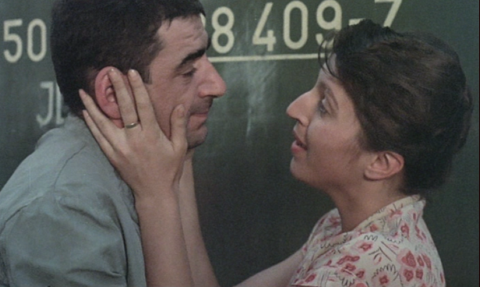
In the Yugoslavia of 1950, the leader of the country was General Tito who had broken away from the totalitarian Soviet Union and was forging ahead with his own vision of how his nation could be improved. But it was not all a sunny future, never mind a sunny present, as he was keen to prevent Stalinism gain another foothold there, so had set up camps where any perceived insurgents could be sent to avoid poisoning the minds of his countrymen, ironically creating much the same climate of fear that Stalin had behind the Iron Curtain. Which brings us to the family of six-year-old Malik (Moreno D'E Bartolli), who observes his parents as they struggle to get by, though his father Mesa (Predrag Manojlovic) will soon be suffering more than most...
Director Emir Kusturica grabbed international headlines in the mid-eighties, in the movie world at any rate, when this film was awarded the Palme d'Or at the Cannes Film Festival, seemingly from out of nowhere. He was a prickly character, very much walking his own path through his artistry and not above giving controversial interviews, not to mention putting the cat among the pigeons through the themes of his work, and to that end he built up a loyal following around the globe among those who appreciated he didn't do things by halves. Once the terrible problems erupted in Eastern Europe after the fall of the Communist states, his films gained even more attention as he was not backwards about coming forwards with his own view on the turmoil.
But back in 1985, although Yugoslavia was considered progressive by Western standards, even as the only holiday destination in the region deemed acceptable by tourists on the other side of the Iron Curtain, its culture remained unexamined by and large, which rendered this spotlight on a specific time in its history all the more illuminating. This novelty was likely a major part of the success of When Father Was Away On Business, humanising an era that could be very grim indeed with humour, yet unafraid to point out the deep sadness that ran through the society, this by examining the family of little Malik. Mesa loves his wife and his two sons, but he has a wandering eye which has him dallying with a mistress, Ankica (Mira Furlan, later of Babylon 5 TV sci-fi fame).
We are introduced to those two as they travel together on a train; he mentions in passing he doesn't think a cartoon in the state newspaper is very funny, a thought Ankica squirrels away as of possible use later. That later arrives when she's fallen out with Mesa for the umpteenth time, and she points out the cartoon to his party member brother-in-law Zijo (Mustafa Nadarevic), along with Mesa's opinion. Thinking this will be a good way to get him out of the way so he can have a chance with Ankica, Zijo orders Mesa to one of the labour camps as a possible insurgent, leaving his family, including wife Sena (Mirjana Karanovic), unaware of why this has happened and amping up the paranoia. As the title suggests, Sena explains away the dad's absence as a business trip.
It's a particularly fragmented take on an ordeal that many Yugoslavs went through, excused by the way we are seeing most - but not all - of the story through the eyes of Malik, who narrates. Along the way were various asides that constructed a rich impression of what life was like, from our protagonist's sleepwalking which sends him out into the street before his mother notices he's gone, to his first love who we hardly get to meet before she is whisked away in another instance of how the mood of the film can do a volte face, often in the space of one scene. This deliberate wrongfooting of the audience, especially an audience who is relying on Kusturica to take it by the hand and guide it through an unfamiliar world, could be quite exhilarating to those in the right frame of mind willing to accomodate it, but while you expect to feel sorry for the father thanks to his incredible misfortune, by the end it's questionable whether you are feeling sorry for anyone but the kids who have to put up with these flawed adults, with all signs pointing to them ending up much the same. Music by Zoran Simjanovic.