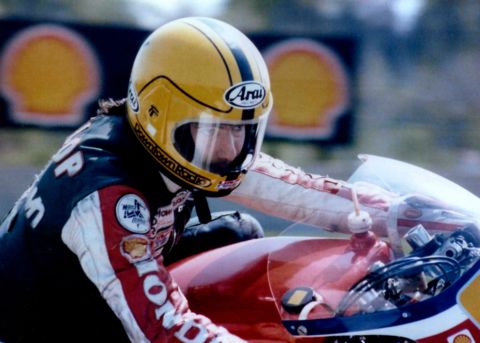
To outsiders, the sport of road racing motorcycles around the country lanes of Europe seems a crazy occupation, for unlike the racing on specialist tracks, there are so many obstacles that potentially could cause an accident, one that could well be fatal. The riders call these elements "furniture", but to those unconvinced of the worth of such a dangerous pursuit, they might as well be termed death traps: hundreds of participants have died down the decades the sport has been in existence, but still that thrill of the speed, of being in control at that speed, draws more racers in. Two of the most successful champions in the history of the sport were the Dunlop brothers, Joey, the eldest, and Robert, the youngest. This is their story.
It's a story that may well fail to convince the viewer not caught up in the excitement of road racing that it's in any way worthwhile, in spite of the Herculean efforts of the directors Michael Hewitt and Dermot Lavery to convey the appeal to the non-fan. But if you felt these riders were free to behave how they wanted, it was their neck after all, then you were probably already a follower of their exploits, in which case you would be well aware of the Dunlop family and this documentary would be preaching to the choir rather than winning converts. What it did was try to arrange its yarn in the same way that the Formula One film Senna had done with quite some success a couple of years before.
There was a difference, however, and that was Senna presented a life that would be inspiring and saddening when you reached the end, whereas Road was saddening all the way through, such was the extent of the death it depicted, and skirting very close to misery porn. You had no doubt that the interviewees had gone through hell with regard to the Dunlop brothers' recklessness and your heart assuredly went out to them as they broke down in tears, yet moving as this was, and was intended to be, the uncomfortable sense that the point of this was not simply to make the audience see the attraction of the racing but to make them feel absolutely dreadful by the time it was over was hard to shake and spoke to an unnecessary manipulation.
Fair enough, it was better to remember these two men (and all the others who died too) than sweep their achievements under the carpet, for they really were terrific riders and that was to be celebrated. Yet they were not so terrific that they were immune to mistakes and fickle fate, and the impression was that nobody could be when dealing with this sport which gave rise to the question why would anyone got to see, say the Isle of Man TT races, when the likelihood was you were going to watch a violent death. In fact, there were plenty of unanswered questions which Road gave rise to, many of them concerned with staring into the ptich black abyss of the human soul that Hewitt and Lavery were not quite as willing to examine as they were to rather ghoulishly highlight genuine tragedy.
Was that tragedy - or tragedies, there were more than one - a flaw in the characters of the riders in general and the Dunlops in particular? Such inquiries are glossed over in favour of pulse pounding footage of the races which often lurch into upsetting scenes of grave injuries, contributing to the queasy effect of the film on both the emotions and the stomach. You can well see how this story was an attraction to a storyteller, it had the huge highs and punishing lows that even the best fiction could only dream of, plus the impact of being absolutely true. Yet if you were not aware of the way it would play out, not being in full possession of the facts before watching, nevertheless the impending doom filtered through every minute of Road was enough to leave many watching through their fingers. The Dunlops come across as truly decent men (selfless charity work is mentioned) which renders their sacrifices all the more depressing. This ends with victory snatched from the jaws of defeat, but it's just not enough to lighten the gloom. Music by Mark Gordon and Richard Hill.