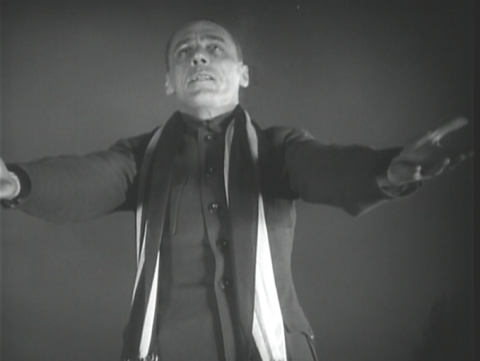
The last years of Tsarist Russia, and in the countryside the peasants are struggling. Take this family: the mother collapses in her hovel and her youngest child runs out into the fields to alert his father: "Mother is dying" is his anguished cry, so he returns quickly, well aware that what is really happening is the woman is giving brith. Another mouth to feed, which only places more pressure on them, leading them to face up to the fact they cannot exist on what meagre proift they make on the farm, so the eldest son (Ivan Chuvelyov) is forced to leave his home behind and head for the city of St. Petersburg to look for more lucrative work. That he finds in one of the factories there, but unrest is brewing...
When discussing silent Russian cinema the name that towers above all others is Sergei Eisenstein, yet he was by no means working alone in this national artwork, though quite often that artistry was tempered by the propaganda he and his contemporaries were required to make. As he crafted his searing ten year anniversary celebration of the revolution with October, another filmmaker was told to do much the same, after all that the state of affairs in the Soviet land had lasted so long was reason enough to rejoice, or that was the Communist Party line at least. That other filmmaker was Vsevolod Pudovkin, a friend of Eisenstein who liked to thrash out ideas and theories with him, and his remit was the fall of St. Petersburg.
Pudovkin's big obsession was with editing, so much so that you had the impression he would have been far happier making montages of still photographs of striking imagery than actually having his actors move around the frame. Those actors were chosen not for their thespian ability, more for what their life experiences had been, so he had no qualms about using amateurs if he felt they had the correct lives to relate and apply to their characters, something that later the likes of Robert Bresson would indulge in when casting their works. But it was those assemblies of visuals that he knew would tell his tale better than any acting or intertitles (these too are rendered in dramatic fashion, however), all worked out carefully before the shoot even began.
The peasant, just to make him appear all the more universal to the days of the Russian poor, doesn't get a name, but we are supposed to see his gradual political awakening as something to aspire to - though presumably not so far that the viewer would feel like having another revolution to rid themselves of an increasingly stern authority ruling over the country. That was an issue when watching this, and many other Soviet propaganda efforts today in that you would admire the technique, which could often be thrilling, yet when the whole ideology behind it may have been based in destroying a huge social injustice, the realities of the further, huge social injustice were too pressing to ignore for most audiences of the twenty-first century. Therefore mixed feelings tended to dominate.
After detailing the peasant boy getting mixed up in a strike at the factory, all the better to establish the themes of rising up and giving the harsh bosses what for, the main plot begins which set out the dreadful conditions Russians had to endure throughout World War One. These pictures are no less powerful, especially when you know that many of those we see had first hand experience of the hellish situation, including the director who must have drawn on his own sufferings back then. As far as that goes, when one soldier laments, "What are we fighting for?" as the close of the conflict looms, you can well understand the massive resentment the ordinary Russian had for the powers that be as a result, and little wonder that the Tsar's days were numbered. We don't see the Russian royal family meet their fate, as this is as mentioned meant to be a celebration to mark a decade without them so rather than getting grim they build to a cinematic cheer, yet while the much pored over editing remains rousing, the sense of a dry lecture is never far away.