On the walls of these caves are paintings drawn by American Indians from hundreds of years ago, and mankind has progressed to unimaginable degrees since then. But for every progression, we must ask if nature itself has been sent into turmoil by the presence of the very creations it set into motion, a being that has only created more itself, yet also has a propensity for destruction. The Hopi Indians had a word for it: Koyaanisqatsi, a word with a number of meanings though most take it to be "life out of balance", indicating that life on Earth had been tipped towards humanity and away from the natural world, but given how far it is possible for us to reach, is our endless consumption and development such a bad thing?
In fact, director Godfrey Reggio left us to make up our own minds, though that was not the conclusion many drew from his debut feature at the time of release, or indeed its subsequent encounters with audiences down the decades. Their conclusion could be boiled down to one thing: nature was benevolent, mankind was destructive, even ignorant, though given Reggio's religious background (he spent fourteen years in silence training to be a monk), it was somewhat mystifying that viewers refused to give him the benefit of the doubt and see he was both celebrating the achievements we as the most intelligent - and spiritual - life form on the planet had generated, and warning us not to get too big for our boots.
Certainly the barrage of imagery that was stuffed into just under ninety minutes was open to interpretation, but that was always going to be the case when there was no narration, and nothing to guide us through it except the pair of captions at the end which underlined the cosmic quality of what was about to happen next. There were words spoken, but they were part of the Hopi dialect and incorporated into the score by avant garde composer Philip Glass; he had been reluctant to get involved with this project, but when Reggio demonstrated what he had in mind he realised what an opportunity was in front of him and he wrote one of the greatest film soundtracks of all time, not simply because it complemented the visuals perfectly, but because it guided you through them.
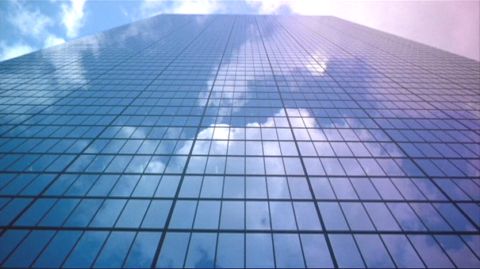
Not everyone likes Philip Glass music of course, and so it was not everyone was on board with Koyaanisqatsi, regarding its message as essentially hippy dippy misanthropy which had an Earth First message that mankind had made a mistake coming down from the trees. So paradoxically aggressive is the film's hammering each picture home that you could well see how commentators could make that assertion, yet for many others there was a definite sense of awe at what had been fashioned from the basic tools of the environment, so that yes, Monument Valley was an area of outstanding natural beauty, but compare it to the human equivalent of vast skyscrapers gleaming in the sunlight and reflecting the cloudscapes the film continually returned to and we had a right to be impressed with what we had done.
Yet just as Homo sapiens was capable of these triumphs, we should also be aware there are lows to go with the highs, so Reggio made sure to include fatuous commercialism (television gets a predictable drubbing, never a favourite with the movies) and poverty (the aftermath of a riot, folks scraping by in slums): here was one film where the claim "All of human life is here" was not far off the mark, all of American life circa late seventies to early eighties at any rate. It may seem odd that Koyaanisqatsi was so embraced by so many different stripes, particularly in the ultra-conservative U.S.A. of the Ronald Reagan era when it asked so many questions which would not sit well with that mood, but then it was as much appreciated by the pessimists as it was the optimists, by the stoners and the environmentalists, those who wanted a succession of stunning images married to overwhelming music for a kind of experience that only cinema could really provide. It was influential of course, and many of its techniques became cliché, but whatever you take away, it's utterly compelling.