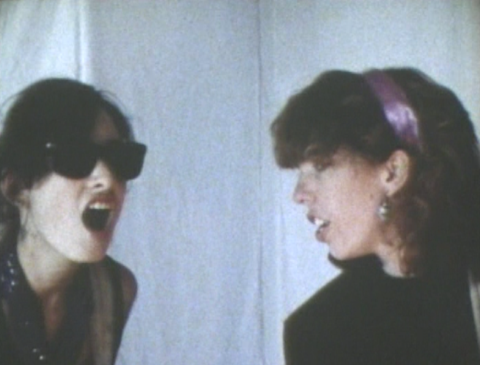
Kitty Carryall (Jennifer Schwartz) meets her friend Bunny Tremelo (Hilary Rubens) off the bus in Los Angeles and they can't wait to catch up with their news, especially about the punk rock band Kitty leads. The bad news is that one member, drummer Alexandria (Kim Pilkington), has been incarcerated in a mental institution as a result of her drug addiction, so the band is one woman down, but Kitty feels confident this is a minor setback on their path to ultimate stardom. She has a fractious relationship with her mother (Jordan Schwartz) which sees her leave home in a fury, though Mom insists on trying to track her down, but the power of punk is more important than any blood ties...
One of the lowest budgeted movies ever to receive any kind of wider release, Desperate Teenage Lovedolls was the brainchild of then-teen underground director David Markey who was shooting on 8mm film and dubbing the soundtrack on later which proved to be more necessary than he would have anticipated when the copyright-flaunting music he used had to be replaced with a bunch of songs from the band Redd Kross instead, lest he risk a lawsuit. If he had simply shown it to his friends as was the original intention this trouble would not have arisen, but such is the price of success and testament to the attraction his work bred in those who caught it, wanting a film capturing the energy of the L.A. scene in the early eighties.
Plotwise, Markey and Jennifer Schwartz, who helped with the script, were inspired by both Jacqueline Susann's Valley of the Dolls plus its subsequent film adaptation and the Russ Meyer sequel Beyond the Valley of the Dolls, along with selected obscurities such as Jack Hill's Switchblade Sisters which fed into the frequent trouble the band have with a girl gang who feel they are muscling in on their territory. At just fifty minutes, Markey packed a lot in with what resources he had, legend telling us the whole shebang was completed to the sum of $250 or so, though it owed something to the work of John Waters and his no-budget Dreamland efforts of the previous decade.
Most notably the sense of humour which was relentlessly bad taste - the one line everyone picked up on was "Thanks for killing my mom!", speaking to an issue with parental authority, as one wondered what the Schwartz home life had been like when Jordan was essaying the role of his sister Jennifer's mother and meeting a sticky end in an "I ain't cleaning my room anymore!" act of defiance (one exchange, just as memorable, was "I've tried to be mother and father to you!", "Well go fuck yourself then!"). So rather than a genuinely revolutionary air with rock music as its foundation, this was more a single finger salute to anyone who might have told these kids what to do, a "how dare you give me advice!" temper tantrum of the sort that became all too familiar as the years went by.
What saved this from petulance was its sense of humour which acknowledged the raspberry-blowing nature of its material while acting true to every word. Soon the Lovedolls are on their way to the fame they crave, though Alexandria has been discarded since she gets back on the heroin in a still squeamish, unsimulated shooting up scene, yet how long can they stay on top? In amusingly clichéd sequences the girls get screwed by their record company led by manager Johnny Tremaine (Steve McDonald) - literally in one case - but get their own back in one scene which by all rights should have gone down in the annals of trip sequence history as Johnny's drink is spiked and he goes walkabout, freaking out at the concept of a cinema exhibiting Barbra Streisand's Yentl among other things. Desperate Teenage Lovedolls (originally Runaways until Kim Fowley intervened threateningly) was full to the brim of such mean minded camp as that, so even if you had reservations about the music then the humour and sheer chutzpah might well hit the mark. There was a sequel, too.