Once upon a time before the time of Men, before the magic in the world died out, there was a town called Dale which was devastated by the fearsome dragon Slag. There were only three survivors, including the soldier Torin Oakenshield and the Princess Mika, and they resolved to do something about this outrage so sought the wizard Gandalf to assist them; he was sympathetic and told them they needed to retrieve the Arkenstone, a precious jewel that Slag coveted and was the source of much power. But first they had to recruit someone who could steal it from under the dragon's nose - a hobbit named Bilbo Baggins.
If this is sounding vaguely familiar, it's thanks to this short cartoon being based on one of the most famous books ever written, but if you know the text you'll be aware some liberties were taken. The story went that animation producer William L. Snyder, an American who had decided to capitalise on Eastern Europe's flair with cartoonery and moved to Prague to employ the local talent, had bought the rights to J.R.R. Tolkien's children's book with a view to crafting a feature film out of it. So far, so good, but time went by and the project never got off the ground, so to ensure he kept the rights he produced a quick effort just before he would have to hand them back.
Legend has it this was only shown in one cinema right before the cut off date, but ever since it has been the source of surprise to the unwary: a cartoon of The Hobbit made in the sixties? Really? To direct, Snyder asked his colleague Gene Dietch, as they had made a series of Tom and Jerry cartoons quite recently. Now, Dietch was a talented animator but unfortunately for him is forever linked to these works which are reviled by fans of the cat and mouse characters, even more than the Chuck Jones versions, simply because for Tom and Jerry they felt "wrong", were not funny, and were obviously done on the cheap: just mention Dicky Moe to a seasoned aficionado and watch them quiver, although The Tom and Jerry Cartoon Kit has pleased some.
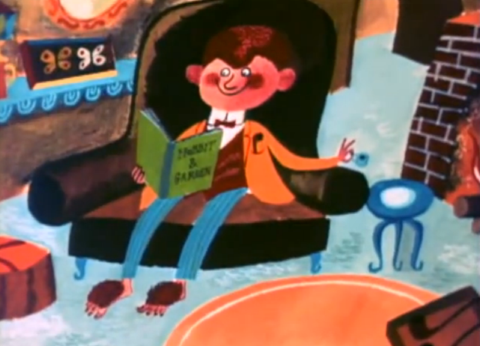
Anyway, that was all in the past when Dietch approached the Tolkien tale, but he had a dilemma, which was that Snyder noticed he did not have to make a feature length movie out of the material, and therefore it would be cheaper to make it eleven minutes long and stick to a few highlights. It wasn't even animated, with the action relegated to a series of stills which were placed under the rostrum camera and made to look as if they were moving that way, sort of like the BBC series Jackanory, which would tackle The Hobbit around fifteen years later and prove Bernard Cribbins would have made a terrific Bilbo Baggins if a film had been made then. With narration by the decidedly non-famous Herb Lass, the journey to Dale was reduced to a meeting with two "groans" who try to eat our heroes and Gollum who barely has a cameo.
In truth, the designs have a neat, almost psychedelic quality which is very sixties, so it's not a chore to watch unless you're a purist who is horrified at what was done to the source, with the addition of a Princess instead of the dwarves to render it all the more fairy tale-like possibly the biggest misstep, especially as she acts as Bilbo's love interest for a late on development at the finale. Quite why Dietch thought Slag was a better name for the dragon than Smaug is not recorded, but it does make him sound like an East End gangster rather than the imposing reptile of the imagination, and he is defeated with uncommon haste to keep this down to the briefest running time possible. Nobody is going to prefer this to Peter Jackson's version (though he took his own liberties which rankled some fans), and they likely won't prefer it to the Rankin/Bass TV special of the seventies either, but if you are short on time and want a potted condensation of The Hobbit, and are not a stickler for detail, then... it's something to consider.




 Display comments