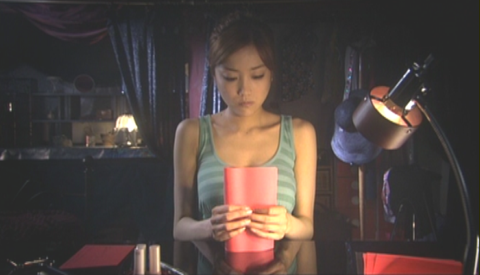
The parents of teenage Kyomi Wago (Aimi Satsukawa) have tragically died when they tried to save a cat from being crushed under the wheels of a large truck; alas, it was the Wagos who were killed, smeared over the road and left in pieces on the tarmac, with Kyomi looking on horrified at the carnage. At the funeral, she now has to stay with her older stepbrother Shinji (Masatoshi Nagase) and his helpful wife Machiko (Hiromi Nagasaku), which is bad enough for her, but then there's a visitor she hasn't seen for a while, her selfish older sister Sumika (Eriko Satô) who shows up asking for money for the taxi just as Kyomi is doubled over suffering an anxiety-induced asthma attack...
Every family is dysfunctional in its own way would appear to be the message behind what writer and director Daihachi Yoshida was bringing to the world with his quirky drama Funuke Show Some Love, You Losers!, or Funuke domo, kanashimi no ai wo misero as it was known in Japan, which was most notable at the time for featuring a serious performance from model Eriko Satô, then best known for playing the live action version of Cutie Honey. Appropriately, manga is an important feature of the plot, just one aspect which has the audience wondering how they're supposed to be feeling about each of the four main characters as our allegiances shift with each fresh revelation.
Kyomi is the aspiring manga artist, but she has, as we find out in flashback, won a competition when her comic based on the life of Sumika was released to great acclaim. Now, her sister believes that everything problematic in her life can be traced to that humiliation, since it depicted her as a few sandwiches short of a picnic to put it mildly, so are we supposed to regard Kyomi as unnecessarily cruel for bringing this down on Sumaki or did the young woman deserve it? She is responsible for the scar on Shinji's forehead after all, when she attacked him as he tried to prevent her killing their father with a knife when the old man told her those dreams she harboured of becoming an actress are going to lead to nothing.
After spending four years in Tokyo with only one real credit to her name, you might think her father had a point - incidentally, this is just about the only mention either parent receives once the opening funeral scene is dispensed with - but Sumaki is still determined, although she had an ulterior motive for leaving the capital behind to stay out in the country in her home village, and that was the loan sharks on her tail, wanting to be paid back the hefty debt she owes them. Satô is actually very effective here, with the borderline disturbed character she plays undeniably attractive, though the more you see of her the more you realise she is bad news as she has the capacity to be self-centred and even callous according to whatever whim is passing through her head at that moment.
Meanwhile, piling on the misery is Machiko and her relationship with her cold, at times aggressive husband. They met on a dating website and the only reason they were married as far as we can perceive was that she needed someone as she was afraid of getting left on the shelf being over thirty, and he felt pressure to be wed from the smalltown society. That he would actually want to be wed to Sumaki, and is part of a pact with her never to have sexual intercourse with anyone else other than his stepsister, indicates how messed up this whole arrangement is, and as the desperately upbeat Machiko suffers more indignities you could ponder there was a nineteenth century Gothic novel just bursting to escape from this movie. It stayed fairly modern, however, even if there's no mobile phone reception in the village and Sumaki has to write letters to an award-winning director she imagines wants to feature her in his latest production; it doesn't really resolve itself, more draws to a close as their lives continue, issues and all. Well, some of their lives continue. Music by Souichirou Suzuki.