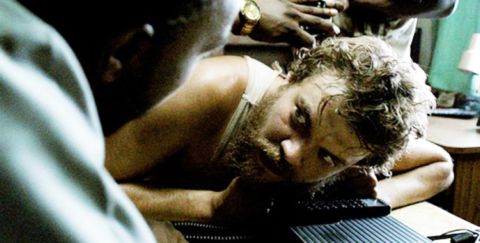
The Danish cargo ship Rozen is sailing through the Indian Ocean near the coast of Somalia, and the crew of seven are looking forward to getting back home, especially Mikkel (Pilou Asbæk), who tries to call his wife and young daughter as often as he can, since he hasn't seen them for quite some time. The men try to keep their spirits up on the long journey and succeed in their way, but there is an unexpected danger on the ocean that none of them thought they would have to deal with. Back in Copenhagen, a director of the company which owns the Rozen, Peter Ludvigsen (Søren Malling) is an experienced negotiator - but how is he with pirates?
The problem of Somalians getting desperate enough to take to the high seas and start forcing their way onto ships was one which seemingly gradually made the world's headlines, but seeing as how in the West the idea of pirates put them in mind of Long John Silver or even Johnny Depp in his Captain Jack Sparrow guise, it was surprising to discover such behaviour was still going on in the twenty-first century. But it was, and a few of the team who had made thriller serial Borgen a Danish worldwide success saw to it that it made a solid story for adapting to the screen, not taking any one case but researching a number to amalgamate them.
Director Tobias Lindholm adopted as realistic a style as possible to recreate the perils such an incident would bring up, rendering the plot similar not so much to a documentary but more to one of the faux-documentary sitcoms which proliferated around the time, only here there was precious little to laugh about - and nobody addressed the camera. There were in effect two main characters for each side of the story, with Mikkel the cook taking care of the business onboard the ship and Peter the boardroom negotiations, except in this case he was dealing not with companies but with maverick individuals who he can only speak to through an interpreter, a man called Omar (Abdihakin Asgar) who is adamant he is not a pirate himself.
The other Somalians - played by actual natives of that country - do not speak English, though at times an odd camaraderie develops between the kidnappers and the hostages, as seen when they gather round the dinner table for a chorus of What Shall We Do with the Drunken Sailor? and Happy Birthday To You (sung to Mikkel's daughter, who may not be present but is uppermost in his thoughts), or where the food begins to run out and they take to fishing, whereupon they actually catch one and are jubilant. But then we are never in any doubt that this jollity will not last, because the fact remains the pirates are always toting their guns and will kill the crew if ordered to.
Therefore what has been deceptively matter of fact - we never even see the pirates board the ship - gradually turns more tense as Lindholm turns the screws on the sailors and those back home trying to come to an arrangement which will be agreeable to both parties. What would be most agreeable to the crew is to be set free, but that is not going to happen any time soon as the days pass into weeks and months with no end in sight, and shipboard conditions grow ever more dire. The film knew how to torture both the characters and the audience: at the point where the audiences have really got to like Mikkel, thanks to a canny script and Asbæk's dedication to the role (tales of method acting followed him around), Peter is trying to get somewhere with Omar but understandably loses his temper, leading the call to be ended with a burst of gunfire and it's an excruciating length of time before we find out if Mikkel is still alive or not. If A Hijacking seemed piffling at first, stick with it because it built up a lot of power. Music by Hildur Guðnadóttir.