Tetsu (Tetsuya Watari) used to be a yakuza, but now he wants to go straight, and it's all because his boss Kurata (Ryûji Kita) is attempting to establish a legitimate business for him and his men, having already bought an office block for that purpose. However, his rivals led by gang boss Yoshii (Michio Hino) are not going to let him get away with that, not so easily at any rate, and Tetsu finds himself rounded on in the street by yakuza thugs determined to force him back into a life of violence, though somehow he resists today and is left lying dazed by the docks, so Yoshii must find another way...
Seijun Suzuki is a director whose cult following occured some time after what should have been his heyday, his overbearing style applied to what were staples of Japanese genre cinema, yet just as he was about to truly break through problems with the studio saw to it that he had to take a long time out from his career, which may have led to his rediscovery but did mean his fans were denied a selection of works which could have defined a golden age for him. Tokyo Drifter is possibly his most celebrated effort, where he had been given a bog standard yakuza plot to shoot, only to dress it up with as many tricks as he could muster.
You do get the impression that Suzuki was bored with the storyline and was endeavouring to do all he could to make it interesting for himself by taking care of the visuals in a manner that suggested some kind of pop art approach rather than any gritty, or even vaguely realistic, method. There are many who settle down to watch Tokyo Drifter and find that after an hour and a half they are none the wiser about who was doing what to whom at the end than they were at the beginning, although its reputation as an impenetrable movie where you were really only viewing it to soak in the imagery was perhaps overdoing just how confusing it was - you could follow it to a degree.
Reading a plot synopsis if you were unsure of how far you would be able to keep up with the film might come in handy, but if you did you would find it was a collection of clichés playing out in much the same way that many a similar movie would do with its shootouts, double crosses, doomed romances and soul searching angst. What you needed to know was Tetsu was trying to be noble in a world that had no use for such high ideals, and he was being brought down to the level of corruption that all the other characters were, including his much respected boss. This leads him, after a few gun battles, to become the drifter of the title, eschewing the society which merely wishes to ensure he is on the same criminal level as it is.
But never mind that, how did it look? If it was true getting caught up with the plot set you on a hiding to nothing, visually you could see why Suzuki won so many plaudits, even if they arrived some time after this was finished and had slipped from most filmgoers' memories at the first release. Whether it was the secretary who spends all her time laughing uproariously at a manga only to be silenced with a bullet, or the nightclub which is constantly packed with manic groovers, or the Western saloon bar where a huge brawl breaks out apparently because this was a movie and that's the sort of thing that occurs in them, there was always something happening, and if the soul-searching from Tetsu tended to bring down the delirious mood, you felt Suzuki always had something new up his sleeve to sustain interest. If there was a flaw, it was that lack of interest in nearly anything but novelty and style, slapped together with a plaintive ballad from the hero's torch song chanteuse girlfriend one moment, then a shootout compromised by distance in feet the next. Music by Hajime Kaburagi.
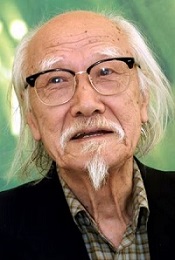
A true rebel in the system, Seijun Suzuki marked out his distinctive style by taking a pop art approach to the gangster cliches he was ordered to make for the Nikkatsu studio, such as Youth of the Beast, Gate of Flesh, Tokyo Drifter and Branded to Kill, but he eventually fell out with them over his wild visuals and spent a decade in the wilderness of television and the independents before he was rediscovered in the late seventies. He was making films into his eighties, with Pistol Opera and Princess Racoon winning acclaim in the 21st century.


 Display comments