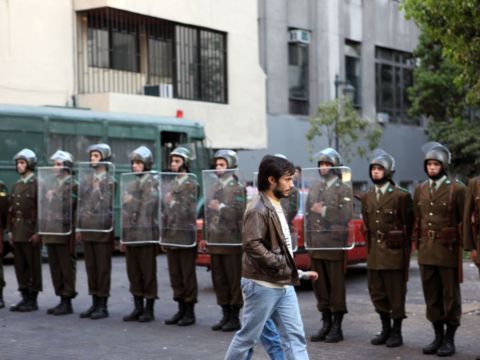
In the Chile of 1988, General Pinochet had been in power for fifteen years and was forced to call a vote on whether he should carry on ruling the country for the next few years, but he and his group of authorities commanded Chile with such an iron fist that they felt confident they would win easily. Enter the opposite opinion, the No vote, who regard the regime as something it should be imperative the nation get rid of, making a Yes decision a disaster for the population already suffering under the institutionalised violence of a police state - but how to persuade the frightened people to vote at all?
This was based on a true story, drawn from actual events by director Pablo Larraín as part of his series of films concentrating on life under Pinochet, of which this would show what happened when the regime was brought to an end. Although this was a tale known about in the most basic terms by most of the international audience, Larraín didn't simply preach to the choir and exclude those who may not be as familiar with the events as the Chileans around at the time would be. He did that by taking care with ths style, which initially looked like a TV production from around the era it was set thanks to him using the same cameras.
So what you had was a film shot on video, with all the accompanying fuzzy visuals that would have been accurate to the late eighties there, which should have been distracting, but funnily enough drew the viewer in thanks to the authenticity this brought out in the story. Ostensibly this was so Larraín could edit in footage from the day, including the original advertising and the perhaps inevitable social unrest, in a smoother way than switching from film or digital camerawork would be, but it turned out to be an inspired choice as if it wasn't for the familiar face of Gael García Bernal in the lead role, you could be forgiven for thinking you were watching original footage from '88.
Bernal played a character based on the man who spearheaded the advertising for the No campaign, bringing move star charisma to that tradtionally looked down on profession of publicity and commercials. Usually on the big screen, and often the small screen too, advertising was populated by, at best, insincere manipulators who will tell you anything they think you want to hear so that they can shill their clients' products, but here Bernal's René Saavedra was a genuinely heroic figure, helping to bring down the might of an evil dictatorship with slick, glossy and optimistic material. He never lets go of the idea that keeping things bright and even humorous will show up the oppressors for the conniving and damaging presence they are.
By law, the No campaigners were allowed fifteen minutes of television airtime to exercise their views, followed by fifteen minutes of the government trying to persuade the voters to go with their continued authority. In this telling, René finds himself pitted against his boss Guzman (Alfredo Castro) who is taking the government's lead, bad enough but the left wingers who want the No campaign to stress the human rights crimes Pinochet's men have been inflicting on Chile think what's being broadcast in their name is a travesty, making light of what is a very serious and pressing subject. As if that were not enough, René starts getting threatening phone calls, sinister figures start hanging around outside his house at night, and unidentified people, presumably the police, break in to put even more pressure on him. Even if you know how this will resolve itself, No works up quite some degree of tension; there are laughs (what is it with that mime?), but essentially this was a political thriller which engaged and enlightened. Music by Carlos Cabezas.