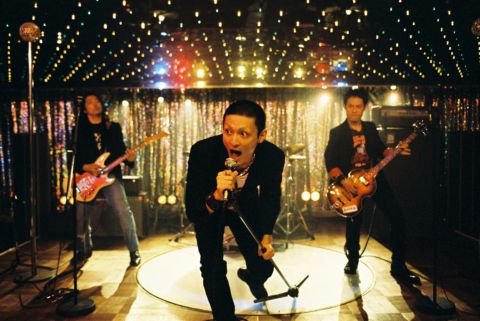
The year is 2012 and current events have spelled curtains for the human race for a huge comet five kilometres wide is heading for Earth. When it will land in a few short hours it will cause a tsunami that will likely wipe out huge swathes of the population, and in Japan the government recommend everyone there get to higher ground as quickly as possible. It's futile of course, nothing can save them, which might be why when old man Taniguchi (Kenjirô Ishimaru) is powering around the deserted streets on his mobility scooter he notices a record shop is still open for business...
Fish Story was actually a lot of stories, none of them involving fish, which would have the audience puzzling over what exactly was going on for most of its two hours or so of running time. So disparate were the threads of the plot that you may be wondering if you were wasting your time with it as though the overall mood was of reflective drama, every so often director Yoshihro Nakamura would throw in a surprise turn into something unexpected, be it comedy, chills or thrills. And still you would be frustrated about what all these aspects had to do with one another, as if the man at the helm was trying out various genres as an academic exercise.
However, stick with it, because after a while a pattern began to emerge, and it was all linked to the presence of an old rock record made in 1975, which we are meant to believe was not only Japan's answer to The Sex Pistols, but beat them to punk by a whole year. When you hear the song in question you'd be more inclined to scepticism - for a start, it sounds like New Rose by The Damned far more than it does Anarchy in the U.K. - but you can treat this cheek as artistic license necessary to fit in with the timeline being created for the movie. That said, there were points where the song didn't feature whatsoever, which would prompt you to wonder what they were doing there; but patience was a virtue.
The 2012 sequence which opens the story depicts the old man going into the shop and haranguing the owner and sole customer there for failing to panic, or indeed react much at all about the impending doom, being too interested in the Fish Story song (composed with the soundtrack by Kazuyoshi Saitô) which we are told will save the world one day, though this seems like either starry-eyed hyperbole or simply misguided. After that we flit around in time between 2012 and 1975 (with a jaunt to 1953), with three young men in the eighties playing supposedly "haunted" songs on the car cassette player of bullied driver Masashi (Gaku Hamada), which includes the Fish Story one, apparently having gathered a myth about its long gap of silence during the instrumental break.
In spite of the fantastical elements as set out by the introduction, and a feeling of some kind of magical arrangement going on which took in incredible coincidences and even psychic premonitions, what this amounted to was taking a pleasure in the little details of life which accumulate into the bigger picture. The sequence on the ferry where a schoolgirl (Mikako Tabe) has accidentally failed to disembark with her class gets caught up in a hijacking which the attendant (Mirai Moriyama) opts to foil singlehanded as if he's a karate Bruce Willis appears apropos of very little, ending with a lack of conclusion which may have you rolling your eyes and asking Nakamura to get his act together, but for all its slow patches the film was biding its time. For what? Not for the long stretch of the original band rehearsing the title song (which is supposed to be like a tall story, in an explanation nobody outside of this film would have heard), but for what happens right at the end. That final montage made it all worth it, a revelation both heartwarming and ingenious: there was method in its madness.