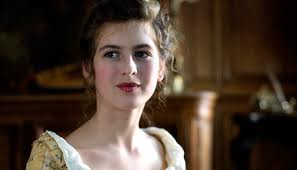
On the road across France in 1763, Leopold Mozart (Marc Barbé) and his wife Anna-Maria (Delphine Chuillot) hustle their talented children from one royal court to the next. Though the nobility are astounded by the musical talent of young Wolfgang (David Moreau), his older sister Nannerl (Marie Féret) is equally gifted: an accomplished singer, harpsichordist and violin player. Yet because Nannerl is a girl, her father refuses to allow her to study composition. Reduced to hiding her own compositions in a secret journal and eavesdropping on Wolfgang’s music lessons, Nannerl chafes against the restrictions imposed by her gender. Sparking a friendship with young Princess Sophie of France (Lisa Féret), Nannerl agrees to deliver a love letter while disguised as a boy which leads to an encounter with the Dauphin (Clovis Fouin), future king of France. Taken with Nannerl’s talent, he encourages her to compose increasingly more ambitious music, yet history is destined to remember only one great composer named Mozart.
The Simpsons once did a spoof of the Mozart biopic Amadeus (1984) with Lisa Simpson in the role of Sally-eri (geddit?), the frustrated sibling eclipsed by her bratty brother, little realising the joke was not far removed from historical truth. This fascinating French period drama shines a light on a neglected historical tragedy. For while Wolfgang Amadeus Mozart was undoubtedly a genius, the film makes a convincing case that Nannerl also had great music locked inside of her, except the rigid social restrictions of the time meant none would give her the key to let it out. What is sad is that Leopold concedes Nannerl has talent, but while it was acceptable to flaunt her gifts when she was a child, growing up means she must acquiesce to traditional gender roles, which means cooking and cleaning at home while Wolfgang wows the crowds. There is a heartbreaking scene where Nannerl discovers her father has signed Wolfgang’s name onto her compositions. She is not even permitted to hold onto her own thoughts.
Mozart’s Sister is a costume drama that shuns spectacle for a more intimate glimpse of the reality of life in eighteenth century Europe. Writer-director René Féret has an intriguingly idiosyncratic style that renders the film somewhat akin to a Mozart family home movie. Rather than romanticise, Féret details the hardship of life on the road for the musical family as they endure harsh weather, cramped conditions and illness. Indeed the film is something of a family affair given, in addition to several members of the Féret clan working amongst the crew, the director cast his two daughters in principal roles. Truth be told, both girls give rather shaky performances yet this timidity serves their roles rather well leaving the characters more nakedly vulnerable. Nannerl’s friendship with young Princess Sophie is drawn particularly well, charmingly naturalistic and not terribly different from contemporary teenagers as they gossip about boys and even sneak a peak at a pornographic book. It is Sophie who surmises the tragedy of their lives when she remarks, “Imagine how different our destinies would have been, had we been boys.”
Although the film comes into its own during the middle third when Nannerl attempts to make a life for herself away from the family and enters the Royal Academy of Music disguised as a boy, thereafter it loses focus, growing increasingly convoluted and straining credibility. Although overlong and slow to the point of seeming aimless at times, the film nevertheless bravely attempts a panoramic viewpoint rather than adhering to a specific dramatic arc and the sadness of Nannerl’s predicament is undeniably affecting. The closing scenes say it all: while Wolfgang ascends to greatness, Nannerl stays at home, tidying up after dinner.