Around a hundred people have been assembled for this examination of the afterlife, and questions about what happens to us after we die. Will we go to heaven or hell? Is there anything we can do to get better treatment in the next world? What if there is no next world and this life is all there is? Many of the interviewees are convinced they will go to a better place when they pass on, and some are keener than others to tell you where you're going wrong if they don't think you've applied yourself to salvation enough. But are they correct? Does anyone truly know what will happen in heaven?
According to this the answer was no, as there were so many contradictory opinions and postulations that you had a wealth of choices to believe in, with the ultimate conclusion being that you'll find out when (and if, naturally) it happpens. This was actress Diane Keaton's first film as director - she would move on to other, fictional subjects in that capacity including an episode of Twin Peaks - and it was seen by some as a Hollywood bigshot star taking a condescending regard to the worries and convictions of the little people who didn't have the benefit of her more worldly perspective.
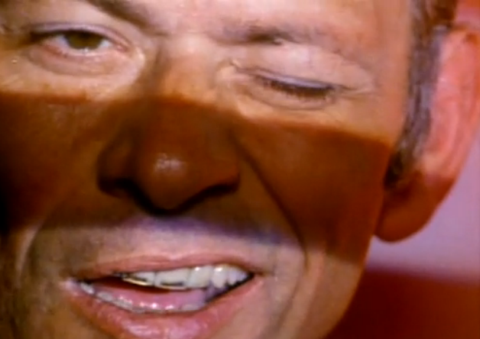
Basically, by her style and her editing the critics thought she was looking down at the subjects from a great height. For the first half at least, this appears as if those sceptics were right, as the interviews are presented in a cut-up fashion as this may have been brilliantly edited with machine gun pacing, but you would be wanting for a more considered argument from perhaps fewer vox pops. Even the visuals where they would be filmed in extreme closeup, at eccentric angles, with shapes of light playing over their faces suggested Keaton was more interested in creating a distraction from what they were actually saying so we wouldn't take them as sincerely as they would have wished us to.
And yet, after a while you would get the idea that she was finding gentle humour in a topic that nobody really knew the answer to, equating the evangelicals with the athiests, the naive with the learned, and drawing them together with one absolute certainty: they were all going to die. The film was split up into various sections such as "What is Heaven Like?" which elicited responses that it was a lot like Planet Earth, but with a lot whiter design (in colour rather than racially), and the probability that its material wealth would be splashed around on every corner, which said more about the person being asked than it did about what would it would be like. They were also asked what God was like, and the consensus was he would have a beard, that was definite.
Interspersed with the talking heads were many, many clips from old movies and instructional films which were apt to the discussion, whether they be black and white representations of heaven, people dying (sometimes comically over the top, other times quite eerie), or simply an image that seemed appropriate; all of these were expertly chosen and contributed greatly to the amused mood. Some opposite opinions were pitted against one another, at times in the same shot, and predictably solving none of the issues whatever side of the yes/no argument you may have settled for, and some of the questions such as "Is there sex in heaven?" could give rise to some very surprising answers. Except they were not solid answers, because it was not a solid subject as the spectrum of views were aired, leaving you as confused as everyone else when pressed on the exact details of the afterlife. By the time the film has ended, the humour has passed towards something more moving, more contemplative. Music by Howard Shore.