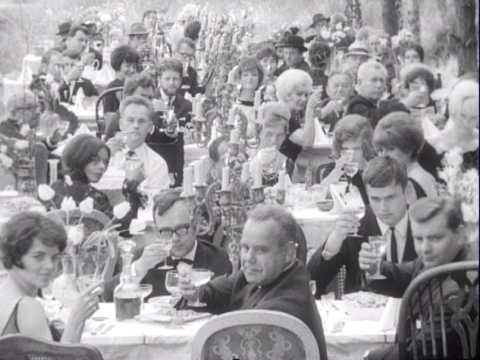
A group of people are enjoying a picnic in this clearing in the forest, and the lady who prepared the food is telling them to eat up because she cannot keep it, it all has to be consumed today. It's so peaceful there that they cannot help but relax and talk randomly about this and that, munching their meal and appreciating the bounties of nature, but then they notice a party of others in the distance, seen through the trees. As they draw closer they realise it's a wedding party obviously on their way to the reception, and the picnickers try to catch their attention but to no avail...
Perhaps they would have been better off if they hadn't tried so hard and simply gone home in this, one of the most inscrutable efforts to emerge from the flurry of creativity Czechoslovakia enjoyed during the mid-sixties before the might of the Soviets clamped down and ensured that many promising careers were thwarted, not to mention many lines of imagination and achievement in the country's arts. As with so many things that ultra-conservatives cannot understand or are at least purposefully obscure in their meaning, this made them suspicious of director Jan Nemec's motives, and sensing something was up they offered it the distinction of being banned forever.
You can see it now, of course, though all these decades later it comes across as more of a piece of its time in spite of Nemec's protestations it wasn't simply a kick against the Communist regime, but more a musing on anyone who will use conformity to force people into doing their will, and woe betide anyone who does not conform. Now why would the Soviet satellite state of Czechoslovakia have a problem with that, you may ask? The answer seems obvious, and the fact that the cast was filled out with various artistic types who the authorities had their watchful eyes upon could not have helped Nemec's case, which left him nowhere to go but television, with the wider acclaim he might have enjoyed eluding him.
That can happen when you don't get to put across your feelings, whether they be creative or otherwise, thanks to oppression. The Party and the Guests, or O slavnosti a hostech as it was originally called, can be a confounding experience now, as everything that was on its director's mind is expressed obliquely, with the dialogue you might have wished to clear things up as they just get weirder and weirder doing the opposite and contributing to the murkiness that is this film's plot. You're not even sure why the picnickers are invited along to the wedding party, or even if they have been invited - it could be they have been coerced into attending on pain of injury should they decide they would rather be doing something else with their time.
So an interesting thing happens, which in many other films dealing with a totalitarian mindset would have the main characters doing their best to struggle out of, or at least stand up against the system which is attempting to straitjacket them. It's a development very pertinent to the atmosphere of living under Eastern European Communism: the guests, no matter that they are at the wedding under duress, simply don't want to rock the boat and in light of the bully boys who are infiltrating them decide to do whatever the leader of the party says. He seems an avuncular sort, but we can tell there is a lot not right at all about this situation, in spite of the picnickers trying to get along with these new overseers, and that comes to a head by the film's climax. Not that there's a welling up of panic or hysteria, it's simple and sinister that the one guest who gets away unseen is targetted for hunting down by a dog: we are not offered a reasonable explanation why, but we can guess. Music by Karel Mares (also in the cast).