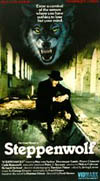
Harry Haller (Max von Sydow) is a man facing a mid-life crisis that is so all-consuming that he decides to kill himself when he reaches fifty years of age. Then he gets involved with a young woman (Dominique Sanda) who could represent the spiritual enlightenment that he so desperately needs and goes out of his mind on drugs. Maybe.
Steppenwolf! Yeah! Git yer motor runnin'! Head out on the highway! Lookin' for ad - no, no, wait a minute. Not that Steppenwolf, this is Fred Haines' leaden, artificial adaptation of Herman Hesse's celebrated cult novel. He tackles this work of internal angst and self-discovery by jazzing it up with animation, special effects, camera trickery and, er, jazz. Hesse's work had enjoyed renewed interest around the time the beatniks became a thing, that was the mid-nineteen-fifties, but there was no way it would have been adapted in this style back them.
It took the hippies and their infiltration of cinema come the very late sixties, especially cult cinema, to set the scene for efforts like this. Von Sydow had always had a knack for portraying men with complex inner lives, so was well cast here, but everyone around him seems stilted and just about every line is heaving with significance that might well have been there on the page, but was stubbornly refusing to translate to the screen, at least in this version. You may find your eyes glazing over more than once (unintentionally) - some books simply don't lend themselves to the cinema.
The "trip" sequence that takes up the last half hour has dated badly, its frankly primitive special effects looking cheap and nasty (and curiously, the Van Gogh segment of Akira Kurosawa's Dreams was oddly reminiscent of it, only more palatable. Presumably this film's cult consists mainly of those who saw it at a midnight showing back in the seventies, while suitably stoned, but as for fans of the book, they might prefer to hang onto their tomes, assuming Hesse is much returned this far after the fact. 10/10 for effort, though: it was plain the project was drawing on somewhat meagre resources.
Fans of adaptations of largely intractable books may wish to know that Hesse's Siddhartha was also adapted in the early seventies, a couple of years before this, and won much the same kind of following (though that did look far more attractive than this drab production). Really Steppenwolf was a relic of the vogue for head movies that was eventually replaced by videos of surfing or fractals, the movie equivalent of your average, vintage lava lamp, but you would get more out of the actual ultimate trip of the final half hour of 2001: A Space Odyssey if such mind expansion was at all your bag, man: that was what this sort of affair blatantly aspired to achieve.