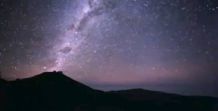
Chile's Atacama Desert was settled on many decades ago as the ideal place to set up observatories for stargazing, and a few sprang up, offering many in the populace a chance to pioneer astronomy and work on finding the origins of the universe, as well as delving into our place in it, however significant or insignificant that may be. But it's not only this cosmic activity which the area is known for, as for a number of years from the nineteen-seventies onwards, the desert was used to bury the Disappeared, victims of General Augusto Pinochet's fascistic regime - and there were tens of thousands of those.
Director Patricio Guzmán had made a career of highlighting the grave injustices which blighted his home country, but funnily enough it took until near the end of his career before he finally created a film which gained wide rather than niche international recognition, with some proclaiming it a masterpiece, something which must have gratified him greatly. It was one of those documentaries which took two apparently separate subjects, in this case the murders of vast swathes of Chilean political prisoners and the nation's contribution to astronomy, and found connections between them to deepen our understanding of both.
If it did better with bringing out the clarity of the Disappeared than it did the mysteries of the stars, then that was not say it was a qualified failure, indeed in places it was very moving and in others visually striking, it's just that perhaps it was natural to see these two concerns as having tenuous links in the great scheme of things, no matter how strenuously Guzmán drew his threads together. The images of galaxies and nebulas were undoubtedly beautiful to look at, he would say, but so was the stark barrenness of the Atacama desert in its way, even if they both hid terrible upheaval, the desert unavoidably hitting closer to home for we inhabitants of Planet Earth than the heavenly bodies.
Except in the Chile of the twenty-first century, it seemed that fewer and fewer people wanted to remember the atrocities which had brought them so low, even if they had recovered from them in leaps and bounds. Some, however, do not forget, and a handful are interviewed, most notably the now-elderly women who sift through the desert sands and rocks in search of the bodies dumped there, bodies which their killers had no intention of ever being mentioned again. How can a country get over such an enormity, pondered Guzmán in his deliberately paced, gently meditative fashion? The answer he did not wish to hear was that it was going to be brushed under the carpet, which he quietly accused his fellow Chileans of now doing.
Therefore what could have been a sombre, sorrowful rumination over a dreadful period of time becomes more subtly needling: the director didn't quite invoke that old saw about those forgetting the past being condemned to repeat it, but he did make a convincing case for mentioning the history of state oppression and murder when there were many in Chile not wishing to discuss it, possibly because either they were involved or knew those who were. One of the astronomers makes the point that his profession and the seekers out in the desert are essentially undertaking the same acts, uncovering more of the past to explain a present which is ephemeral when that past is what dominates, the future slipping back into it with every nanosecond: you can see how the film gets very profound, yet not alienating with it. It ends with another astronomer whose parents vanished under the Pinochet regime; she offers hope in that she will tell her baby about them, and evidence that they existed will endure.