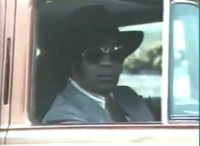
The Baron (John Daniels) lives a double life. By night he is a Los Angeles pimp, with a harem of young women willing to prostitute themselves for him as he drives around in his red and yellow Rolls Royce, visiting his ladies of the night and taking his profits from them. But the racist cops are determined to bring him down, and to that end coax one of their officers into drag to pretend to be a potential whore for him, but he's wise to their scam and once the undercover man is in his car he flatters him, then grabs his balls and squeezes, causing him to yell and hurt the ears of the detectives listening in on a secret radio mic...
Just one of the supposedly hilarious, for part of the time at any rate, antics which The Candy Tangerine Man gets up to, one of the most notorious of the blaxploitation movies to emerge from the nineteen-seventies (no less than Samuel L. Jackson named it as his favourite), which marked the genre's heyday. The most vocal complaints about this was due to the plain old nastiness of its low budget thrills, evidently seeking to compete with more generously funded productions by offering up what they could not, or rather what good taste and indeed good sense dictated they would never touch with a bargepole, even the grittier action or thriller efforts of the decade which had major studio backing.
This freed up exploitation expert Matt Cimber to be as extreme as he could manage, if even then you got the impression he didn't have the cash to go as over the top as he would have wanted, though what he did conjure up made an impression on the few who got to see this either when it was released in cinemas or more likely, on murky home video. You would know what you were getting if you'd ever seen something similar, which was the sort of sex and violence on a rather shrill scale on the lower end of the cultural spectrum, however what many of Cimber's rivals did not have was Daniels, who cut a memorable figure as the pimp, with his sharp-tailored suits and laid back charisma.
Yet if anything the main character's magnetic personality made this more reprehensible, for although The Baron was making his fortune off the backs of vulnerable women, we're meant to see him as far preferable to the villains of the piece who are either insanely venal cops or utterly scuzzy gangsters who go to revolting lengths to make sure he is forced out of the business. We can tell The Baron is a relatively decent man in this setting because not only does he save an underage Indian girl from a life of desperation by winning her from her pimp then giving her the cash to go back home to start again, but in a ridiculous twist he's also a fine, upstanding family man. That's right, once he's done procuring for the week, he returns home to the unsuspecting wife and kids!
His chatterbox next door neighbour happens to catch sight of him in the garish Roller (which is fitted with machine guns!) on the street one day, but cannot believe he is the same person as that nice fellow who is so good to his family, and you'll have trouble swallowing it as well. Nevertheless, a substantial section features such business as romancing the missus and mowing the lawn (very choppily, it must be said), and when we're done with those bits it's back to battling the cops and the Mafia who are making life hard for him. They do this by cutting up one of his girls, which puts off any other prostitute working for him, but there's still a large amount of cash he is entitled to that he needs to get hold of, which he does by such pillar of the community behaviour as putting a hood's hand into a waste disposal and turning it on. There is a twist when we find out who was really behind The Baron's engineered downfall which offers a righteous female perspective, but mostly any enjoyment here is from the ludicrous plotting, if you have the stomach for the grotty morals and violence. Featuring actual prostitutes, too. Music by Smoke.