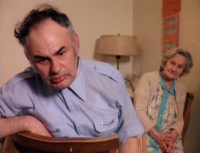
Filmmaker Ira Wohl wanted to make a documentary on his cousin, Philly Wohl, because he thought he might be able to help him out. Although in his early fifties, Philly had the mental age of a five year old child - when asked he would say he was sixteen - and his parents Pearl and Max had looked after him practically their whole life. They had at one stage, when things were getting tough, given him up to an institution when he was a boy, but he had suffered such a terrible time there that they welcomed him back into their home and taken care of him all these years. And it had been many years...
Therefore what Philly needs is the chance for a degree of independence, because his parents are in their seventies over the space of the three years Wohl made his documentary, not getting any younger, and reluctant to admit that they're not going to be around much longer to look after their son. Philly is described as retarded throughout, which may have dated the film in these days of retarded meaning "something I dislike on the internet", but the emotions that this quiet and modest film brought out in the audience have been enough to justify its winning the Academy Award for Best Documentary back when it was released, offering it a more timeless quality than you might have expected.
That the director was so familiar with his subject helped immeasurably, so if there's a home movie quality to much of what we see, with clever editing of what must have been a wealth of footage, we are able to follow a simple narrative as Philly's progress became more inspirational over the course of the three years as he became more able to cope. Nobody was under any illusions that he would achieve complete independence, but his cousin Ira's faith that this was not an impossible situation and there was hope offered much of what made this so moving. Oddly, it was not Philly but Pearl who turned out to be the heart and soul of the piece, doting over her son and feeling immense guilt that she cannot do more as her age advances.
Pearl tells the camera early on that basically she wouldn't wish a mentally challenged son or daughter on anyone because of the amount of heartache it has given her over the decades, yet while this could have been as depressing as such moments as that indicated, Wohl was careful to make sure we saw the positive effect the cheery Philly has had. Indeed, in a cruel world where his disadvantages could have meant a life of misery for both him and his family, it's truly touching to see how well those around him treat the man, with those dealing with him every day evidently having the patience of Job: he does have a tendency to get overexcited, to sing loudly and often, and if he doesn't get his own way he grows bored and restless.
All of these factors are things Pearl and Max have had to tolerate for a long time when we catch up with them, but Ira persuaded them to allow Philly to attend a special school. Any reservations about how he would react after being separated from his parents after spending every waking hour with them for such a length of time are dispelled when he turns out to love the place, and really blossoms thanks to the care of the tutors there. This brings about the biggest step which the family have to achieve, that Philly is allowed to move into sheltered accomodation, and Pearl especially has misgivings about this, not willing to let him go because understandably she wants to look after him for as long as possible. Although the subject matter could have been deeply uncomfortable, there was such sensitivity to the film that individual scenes such as Philly meeting Zero Mostel backstage at Fiddler on the Roof (Mostel is wonderful with him) or even managing to buy an ice cream sandwich on his own make up a work of quiet power.