Edvard Munch (Geir Westby) was a nineteenth century Norwegian artist who may not have been approved of for the greater part of his lifetime, but has gone on to be vastly influential in the artform of expressionism and all the psychological probing that his work brought out in the viewer, whether they wanted it to or not. The fact that many in the late 1800s did not want to be contemplating the darker recesses of their own minds not least Munch's mind meant he was held up to scabrous criticism from the cultural observers of his day, not helping the torture he felt for never attaining the intimacy he sought...
Well, that sounds hilarious, doesn't it? No, of course not, as this was British director Peter Watkins' first film after moving to Scandanavia, disillusioned with the moviemaking process elsewhere, and creating what for many people was his masterwork. Those fans naturally had a higher tolerance for productions lasting three and a half hours, though if you saw it in cinema it would have had about half an hour shaved off, not that it's likely you would have noticed. That's because originally Watkins made this for television where you could spend an evening captivated in the comfort of your own living room with abundant opportunity to wallow in the self-described "hell" of Munch's existence.
What's it all about? was the question on the archetypal tortured artist's mind, or that's according to this anyway, as after the traumatic experiences of his childhood which not only included his own near death from disease, but the actual death of his mother and sister (at a tragically young age) from tuberculosis, his remaining years were taken up with self-expression of a kind not embraced by polite society. Indeed, if this were not so serious the regular bulletins from the narrator about who was going to die too soon and from what (usually a lung condition) would begin to take on the mantle of running joke, so eager was Watkins to thread the presence of impending death through every fibre of Munch's days.
Even when our hero tries to find some sympathetic ears and begins to mix with the Bohemian society in Kristiana, the capital of Norway at the time (later Oslo), he never quite fits in, as indicated by Watkins having his star never speak to anyone in the same scene, though he often casts a haunted gaze towards us in the audience. As with the rest of the cast, Westby was a non-professional, in his case an art student (so he could convincingly wield a paintbrush) in his only film as he returned to the art world immediately after this, but many have noted how well he inhabited the role though a lot was to do with Watkins' documentary-style direction, choice of shots, and editing, with the narrator doing a lot of the work for the amateurs in guiding us through the art, the relationships, and the suffocatingly conservative, inequal society.
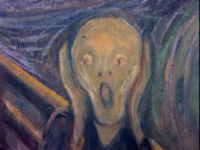
In this telling, Munch only had one significant love in his life, and she was a married woman called here Mrs Heiberg, an affair that was over far too soon for him and summing up his aching loneliness, as well as his mixed feelings about women, both longing for female companionship yet shying awkwardly away from it. If he didn't wear his heart on his sleeve, he wore it on his canvas, etchings, woodcuts and whatever other medium suited him, all building up to his enduring work The Scream, one of the most recognisable images of horrendous anguish in the world. Not that Munch's anguish was as nameless as it might seem in that picture, but the more those intellectuals around him carried him along with their arguments on what life was actually for, with many finding sex as the ultimate expression of self, the more confusion this brought about. Watkins reaches a melancholy profundity of sorts when you take away Munch's point of view that life was just too complicated if you thought about it too much - yet once you started pondering, it was impossible to stop.
Critical, socially-conscious British filmmaker whose short films like Diary of an Unknown Soldier led to work at the BBC, making Culloden and The War Game, the latter proving so controversial that it was banned. He turned to cinema features with Privilege and Punishment Park, then went to Scandinavia to create incredibly long dramatic documentaries such as Edvard Munch.