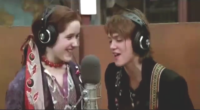
Nicky Marotta (Robin Johnson) is a teenage runaway who is living on the streets of New York City where she has the idea of making money by busking tonight with an electric guitar. This does not go down well with the owners of the nightclub she is standing outside, and they move to chase her away so she smashes the headlights on their car, leading her to be taken into custody and set up for tests on her mental health. But she's not the only teen to suffer so, as on the other side of the financial divide is Pamela Pearl (Trini Alvarado), daughter of a politician who might be suffering a kind of breakdown...
And when these two girls met, it was - well, it wasn't murder, but it was the stuff of cult movies when what producer Robert Stigwood was hoping for was the stuff of blockbusters, much like his previous hit Saturday Night Fever. Therefore a sensitive, quirky script by director Allan Moyle about two troubled teens based on a diary he found by a real life troubled teen was developed into a delivery system for Stigwood's soundtrack album, and Moyle left the project before it was completed. Nonetheless, in spite of the commercial side being shamelessly pandered to, with the music designed to cash in on New Wave and a wish-fulfilment aspect to the plot gradually emerging, Times Square was not a hit.
But as if the plucky spirit of that young down and out who inspired the film was not about to allow this to fall into obscurity, an audience of those who didn't mind the often clumsy assembly of the themes and characters began to emerge, and Moyle, who left the movie industry for ten years after his unhappy experiences, returned with renewed vigour in the nineties, starting with Pump Up the Volume, as if to say you see? My ideas were right all along! Certainly the Times Square followers would have wanted to see more of what was excised from his cut, including a more overt lesbian narrative between the two lead girls, but they were still quite content with what remained.
Pamela and Nicky meet in the same room of the mental hospital they are assigned to, and while they are not sure they are unbalanced at all, just finding it hard to fit in with life, everyone around them cannot tolerate a misfit (or two) and try to force them to undergo various tests and treatments for something that may not be there at all. It's only a matter of time before Nicky flees once again, but takes the opportunity to invite Pamela along with her, and soon they are living on the streets - and in a spacious warehouse by the river where they are never bothered. Somehow they manage to eke out their cheerful existence - you had to take a lot for granted unless you approached this as an out and out fantasy - and hit upon the idea of making music.
This was where the punk ethic entered into things, but it was a very romantic version, with no sniffing glue or spitting, never mind tunes improvised by the characters which fail to sound entirely authentic and more what a middle aged man (say, screenwriter Jacob Brackman who rewrote the original script) might think a couple of snotty teenage hellcats would come up with as rebellious self-expression. They also start a line of throwing television sets off high places as a way to advertise their band The Sleez Sisters, and a right on, "understanding" (but possibly self-serving) local DJ (Tim Curry with a wavering American accent) supports them by giving them exposure on his show, which proves a double-edged sword.
It is at this point where disillusionment on a scale Moyle must have been feeling enters into the story, and the girls' bond is threatened, which doesn't make much sense without the missing scenes to explain why. The finale is one of those grand statements common to so-called youth pictures, an impromptu concert at Times Square when it was still seedy - the film is if nothing else a snapshot of what it looked like back then, and it's amusing for cult movie buffs to try and pick out the titles on the marquees lining the streets - but for all its flaws and cynical marketing, there was something about this which spoke to the outsider, whether they bought the soundtrack double album or not. Certainly every so often a reference to this arises up in pop culture, indicating that there was a creative viewpoint this appealed to, and while it's not going to be on many famous or influential movies lists, against the odds Nicky and Pamela connected with someone out there.