There is an unofficial march being staged today by pensioners in Rome about the paltry amount of money they are getting every month, but soon the police arrive and break it up because they had no permit to conduct the protest. This leaves their actions somewhat futile, and one of the demonstrators, retired civil servant Umberto (Carlo Battisti), hides with a few others from the cops to wait till the ruckus has blown over. His only real friend in the world is his dog Flike, which is no help when he has run out of money to pay the rent - what can he do now?
The final neo-realist film by one of the masters of the style Vittorio De Sica, Umberto D. was one of those efforts which quickly gained the reputation of a guaranteed tearjerker: essentially, if you did not cry at this you were some kind of stone-hearted sociopath who had no compassion and possibly no soul worth speaking of either. And certainly there are plenty of people who had enjoyed this on the level it was intended, no shame in that as it was an expertly made movie, but in that skill was a rather blatant attempt at tugging the heartstrings, all of which rested on the casting of the dog as Umberto's companion.
The lead character, you see, is not some cuddly old man who we were instantly feeling sorry for, with a gentle twinkle in his eye and his propensity for being nice to everyone he meets, as actually he is not playing for audience sympathy. Indeed, he has to earn our appreciation, and it's the increasingly dire circumstances he finds himself suffering that should be having us getting emotional: the cold landlady who means to throw him out even if he did have the money, the fact that nobody even thinks to help him out, not those who were friends from way back or anyone he meets more fleetingly, and his pride which prevents him seeking charity.
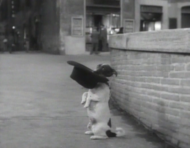
Which would be all very well, and a brave choice, except De Sica and his writer Cesare Zavattini decided to put the dog in there. This is such a cute mutt that it immediately humanises Umberto without the non-professional actor having to do anything more than be nice to it when he's not particularly warm towards anyone else except the maid, Maria (Maria Pia Casillo), who similarly is in difficult surroundings when the landlady will chuck her out as well once it is revealed she is unmarried and pregnant - and doesn't know who the father is. Some of the best scenes in this are wordless: undoubtedly the one where Maria begins the duties of the day and gradually breaks down in tears is a powerful one.
But then there's the pooch which channels all the goodwill you may feel for Umberto despite yourself into its furry adorability, and leaves this less an exposé of the treatment of the elderly, which would be perfect for neo-realism and strong enough for the whole story, and more an oversweet tale of one chap's love for his pet. Nevertheless there were still sequences here which operated with a well-nigh ruthless assault on the emotions, and if you didn't mind feeling as if you were a puppet with De Sica as your puppeteer the way in which Umberto begins to see no way out except suicide yet cannot find a safe place for Flike to stay once he's gone was very effective. For dog lovers, although there was an ending which suggested this was soft enough not to make the inevitable the last shots of the movie, this would be a test of your feelings (did Umberto really think his plans for Flike were a good idea?), but for others it was hard to shake that sense De Sica was loading the dice without the guts to finally face up to the issues he raised. Music by Alessandro Cicognini.




 Display comments