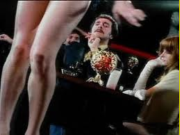
A stripper has been murdered but the police are baffled as to who could be behind the crime, though one city newspaper has an idea of who might be able to help. They send one of their reporters, Nancy Weston (Amy Farrell) over to the apartment of famed private detective Abraham Gentry (Frank Kress) seeing as how he refuses to answer his telephone, and even when she shows up at his door he is reluctant to allow her in. But she is pretty persuasive, and sets out the plan: he is the best at what he does, and he can solve the mystery - will he do it?
Cult director Herschell Gordon Lewis's swan song until, er, his later swan song some decades afterwards when he was coaxed back behind the camera, was this tawdry item which should by all rights have been one of the most offensive films of his career. However, since the showman in Lewis always showed through even his most gruesome scenes, it was in effect difficult to get riled up about films that went so far to disgust that they almost ended up being quaint, not that this was something for all the family, but as with his other bloody flicks there was something simply daft about them.
That didn't mean that his oeuvre failed to attract gorehounds looking for a satisfying spectacle, because once he had made his name as an exploitation maestro they were largely all who appreciated his films, and even when they were being released first time around to those who were not watching these in an ironic frame of mind they would make their money on the less starry venues: drive-ins, grindhouses and the like. But money they did make, with Lewis only retiring from the movies after this one because he could make more money as a business advisor, with many lucrative books to his name.
Give the audience what they wanted was his tenet, and the cheaper you could do so the more returns you were likely to see as long as you were bringing in the punters. Lewis was way ahead of his time as far as horror went, as the parade of actresses (or on this evidence, strippers who would work for peanuts) getting offed here in creatively stupid ways paved the way for the gory comedies of the eighties and beyond when special effects really began to take over as what many horror fans wished to see in their chillers. In this case, the murderer strikes a few more times, yet it was apparent Lewis was growing restless with his usual formula.
Hence The Gore Gore Girls was more playful than usual, whereas before his movies had been presented with a wink to the cannier members of the audience not to take it too seriously, this time Lewis was downright irreverent in what he chose to include, from the refined (relative to his dingy surroundings) detective and his daffy sidekick who guided us through the story, to the man who sat at the strip club bar smashing fruit and veg with his bare hands (including a few melons - impressive), and so forth. There was also room for a proper comedian as veteran gag man Henny Youngman hoved into view as the owner of the club, seizing the opportunity to fire off a few ancient one-liners (hey, he was in Goodfellas too, that's quite a filmography). The effect of this was that the actual deaths, while bloody, looked to be an afterthought, as if Lewis was going through the motions with only one infamous bit standing out. You needed not so much a strong stomach for this one, and more a high tolerance for the "jokes". (Terrible) music by Lewis.
American writer-director-producer of low budget exploitation movies who helmed everything from nudist flicks to children's stories, but with the release of Blood Feast his reputation as the Godfather of Gore was made. He followed this with Two Thousand Maniacs!, Color Me Blood Red and The Gore Gore Girls, among others, then left the business to pursue a career in marketing; he returned thirty years later with Blood Feast 2. Lewis' generally poor production values, amateur actors and shaky plotting are all forgiven by his fans.