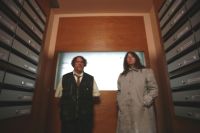
Louise (Yolande Moreau) works in a clothing factory in a small French town, but feels left out for many reasons. For one thing, she cannot read, and for another she doesn't drink so decides against attending the local bar with her workmates, except tonight she is persuaded because the staff have just been given their new smocks to wear. She didn't get one because she's so fat she has to have one specially made, but later that evening one of her superiors visits her apartment to hand over her smock, and perhaps take things further. But Louise will have more to worry about the next day...
This was one of the blackly comedic movies made by the Belgian directing team of Benoît Delépine and Gustave de Kervern, and like most of their works sure to divide audiences as to the merits of their bleak take on society, and whether they had gone too far in trying to be funny about it. Certainly you needed a strong sense of humour to divine many laughs from the situations here, but if your taste ran to the less cheerful, and more deadpan style of comedy then these filmmakers' withering view of modern life might well have struck a chord in you, even if you didn't quite follow their politics.
Yes, this was a political film too, although you might not catch on to its message until the actual quote from the historical Louise Michel at the end credits. Moreau was not playing her, as she was in the role of the slow witted worker who happened to hit upon an idea that appealed to her comrades, which was how the Michel part of the title was introduced. He was played by Bouli Lanners, and is a budding hitman who lives in a caravan park on the outskirts of town; well, he says he's a hitman but he's never actually killed anyone, though he does have an arsenal of weapons that he plays with as if he were still a little boy (or... but that would be telling). But why would the factory workers need his services?
This is down to a problem they find when they go into work the next day: all the machinery has been removed. It hasn't been stolen, it's just that they've all lost their jobs as the work has been moved out of the country to be made at a lower cost and the management were too cowardly to tell them. They women have a meeting and cannot decide on a course of action until Louise pipes up with the idea that they kill the CEO of the company in revenge, that'll learn him. They are very taken with this idea, and so Louise is despatched to track down a killer she knows, can't find him, and has to plump for Michel instead, who is a coward himself and as we see, cannot even bring himself to shoot a noisy dog he's been paid to execute.
He needs the money though - the cash that the workers have been given as compensation - and so asks his terminally ill cousin to carry out the hit in a scene that what has gone before does not quite prepare you for the audacity of just how far Delépine and de Kervern were prepared to go for a laugh. Bad taste doesn't quite seem to cover it and they risk losing a large part of the audience, but the fact that they went there and they're daring you not to chuckle is the mark of a brave pair of moviemakers. Such near the knuckle gags continue throughout the rest of the plot, as if their outrage at the treatment of those losing their jobs thanks to the fat cats who pull the strings has led them to go as far as they possibly can, not simply to entertain those viewers prepared to folllow them, but to make them consider how corrosive rampant, unfettered capitalism can be. Of course, the fact that everyone in this is so hopeless doesn't exactly strike an optimistic note. Music by Gaëtan Roussel.