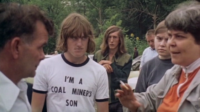
In 1973, coal miners at the Kentuckian Harlan County Brookside mine decided to join a union, and looked for agreement from the Duke Power company who were their bosses. The company refused, and so the workers opted to strike for better safety conditions and better pay, leading to a punishing time of even more poverty than they had suffered when they were working, as well as the threat of violence for the picketers. Director Barbara Kopple and her team chose to cover this, living with the locals while building up a picture of what it was like for a miner in those days, and how things had changed.
The answer to that being, not much, or not nearly enough. Harlan County U.S.A. was an Oscar-winning documentary that raised political consciousness wherever it was seen, even if the details of the circumstances it depicted remained frustratingly out of reach for too often during the course of the story. This was due to Kopple's insistence on concentrating on the emotional cost of the strike, so that when tumultuous events took place over the year or more of the film's making - including murder - they were almost sprung on the audience who had been caught up in the tales of the harsh conditions miners had to endure.
The documentary began with footage of the workers going down into the mines, accompanied by interviews with those who recalled how tough things were back in the olden days of living memory, where one old man observes that the company cared more about the mules that went into the pits than the men because the animals cost more to replace, or the other chap reminiscing about the serious injury he received when equipment fell on his head only to be forced back to work after one day of recuperating - he still has the hole in his head to prove it. What this brings to light is that things really had not improved much.
To underline the injustice of the situation these men and their famiilies were landed in, and this was a film where injustice figured heavily, a caption appears some way into the action that points out the company made 170% profit over the year when the workers' wages were raised a measly 4% - and the cost of living went up 7%. That's not all, as Kopple piled on the sorrow, with many of the miners the victims of the debilitating black lung: typically of her style, she took her camera into a hospital to see the dying men, dying of a disease that was easily preventable if the company had only shelled out extra to protect their employees, something they were extremely reluctant to do if it meant eating into those profits.
But as much as Kopple sympathised with the menfolk of the town, it was with the women her heart truly resided, as much of the footage was given over to their views as they saw their husbands and sons put through hell for a pittance and living conditions that looked to be barely above the poverty line. We see that the wives were instrumental in keeping the protest alive, and it was their power that ensured a strike that was having little real effect on the company thanks to their bringing in scab workers to keep the pit going - and the fact that they were so incredibly rich in the first place - gained national significance. The company employed underhand tactics that included outright initimidation, with the shacks the miners lived in being shot at, and the heavies facing the picket lines making no secret that they carried guns and were prepared to use them, which in one outrageous instance actually see a striker murdered. Perhaps if a narrator had been used then the politics of the situation would have been clearer, but there's no denying the emotively hardhitting qualities of Kopple's film.