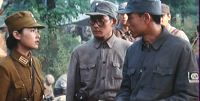
Third in the Axis of War trilogy of Chinese war epics. Where previous instalments Axis of War: The First of August and Axis of War: My Long March detailed the Chinese civil war and communist revolution, Night Raid focuses on the Japanese invasion just prior to the Second World War. It opens in 1937 as two rival regiments scuffle over who will board the last train to Yamenguan where the Chinese are suffering heavy losses. Plucky girl reporter Guo Xiaojian joins the 369th regiment led by heroic Captain Chen Xilian and his comedic, yet capable Lieutenant Zhao Dali. As Japanese troops advance into civilian territory, bent on intimidation and destruction of the long-suffering peasantry, the 369th investigate the enemy’s forces and uncover a huge airfield full of fighter planes. Seeing the urgent need for an immediate strike, the small regiment mount a daring solo raid.
Dedicated to the 80th anniversary of the “People’s Liberation of China” this is a guts-and-glory style of war movie, gung-ho in tone and with characters that are broad stereotypes straight out of a Forties flag-waver. An Lun mounts big, pyrotechnics laden action set-pieces as spectacular as any contemporary Hollywood epic and just as comic book in tone. His whirling camera eulogises Chinese heroes firing huge machineguns from the hip at fighter planes flown by scowling Japanese villains. A communist party official calls the 369th “jewels of the (communist) party” and though the film touches on the suffering of ordinary civilians, this is closer to a bombastic update of the old Chang Cheh Shaw Brothers action-adventure The Anonymous Heroes (1971) than the sombre likes of Saving Private Ryan (1998).
Tragic sacrifices are made but our heroes persevere while stoic Captain Chen dispenses folksy wisdom. He has a mild romance with pretty Guo Xiaojian who good-naturedly ribs the flustered Zhao Dali. Lun helms some suspenseful sequences, notably when a group of Japanese soldiers start shooting ducks in the river, unaware that Zhao is hidden nearby. This leads to a nicely humorous moment where comrades mourn his supposed death till he turns up beaming at his own wake. Though the characters are all stock war movie types, a strong cast bring them to likeable life and there are a few moving scenes such as Chen’s dismissal of those from his regiment that have no siblings to console their parents should they die. Guo’s father, a village elder, raises the pertinent point that the peasant folk will inevitably suffer reprisals should Chen’s raid prove successful. Otherwise the film is reluctant to proffer any social criticism that may spoil the celebratory tone.