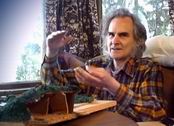
Bruce Bickford is a filmmaker who has pursued his own particular style of clay stop motion animation, unaffected by modern trends and very much in his personal interpretation of the world. At the time this documentary was filmed, he was living just outside Seattle and dividing his time between creating his films and looking after his elderly father George Bickford, who was suffering the effects of Alzheimer's disease. Bruce maps out his background, his view of the world, and what inspires him while the cameras follow him throughout the day, all mixed in with clips from his efforts...
Bickford's insanely intricate work had been presented to the underground film fan without much explanation before Brett Ingram made Monster Road (the name of an actual place, and we see the roadsign to prove it), making this illuminating, or at least that was the idea. Yet although Bickford offers us insights, he remains an enigma, which renders those glimpses of the inner workings of his mind all the more fascinating. The approach is unsentimental, and has been compared to Terry Zwigoff's Robert Crumb documentary, but while it doesn't quite reach those heights the comparisons are flattering.
The film is blessed with an abundance of absorbing footage from its subject's canon, all of it in a seemingly never-ending flux of figures and faces that mutate into one another. If you know of this man's productions it will probably be down to its inclusion in the films and videos of Frank Zappa: Baby Snakes features some brilliant examples, but Zappa barely receives a mention here as it's the rural life Bickford exists in that supplies the focus of the attention. I hesitate to call it a lonely existence, as he fully admits being around most people drives him up the wall, and the impression is that he'd be happy to hole up on his own with enough food to last him for the rest of his days and animate till he wasn't able to anymore.
Ingram captures the man getting up to such eccentricities as acrobatics, tree climbing and swinging a mace of fire around his head, like you do, but it's his father who provides the heart of the piece as he feels his memories slipping away and regrets the trials of old age. George died not long after the film was released, and it would be lesser work without him as while Bruce remains taciturn he offers us someone to sympathise with as this one time architect for Boeing now cannot look after himself too well. Bruce observes that at least now his father cannot berate him for not getting a proper job, but it's a high price to pay for that and as they fill in their family's history with its fatal accident and suicide, and their belief that there is no heaven to go to, the mood grows poignant.
Yet for the fans, the chance to hear Bruce talk about his inspirations will be worth the price of admission alone. He explains that he was always interested in the small things, so the heroes in his films will be smaller than the villains, with Peter Pan being an influence as evidence the little guy can succeed against the odds. He admits the subject matter is often violent (countless clay figures meet grisly demises), but says he prefers that war would be fought creatively through art and film rather than in the real world - it's one of the few times here when the mellow Bickford becomes emphatic. He's obviously a shy and sensitive man and his mental turmoil has brought him into contact with those bullies who would exploit it to bolster their feelings of power, yet it has also fuelled his incredible imagination to obsessive genius-like levels in his artwork. If Monster Road doesn't quite reach the profundity it grasps for, anyone interested in avant garde animation will find it unmissable. Music by Shark Quest.