Are you in favour of or against the death penalty? Here we see that it is in effect in Japan during 1968, and a location for it is presented as we see the building it takes place in within the grounds of this prison, looking for all the world like a simple bungalow, and go inside where there is an execution about to take place. The prisoner is a twenty-two-year-old Korean who was convicted of raping and strangling two Japanese girls four years ago when he was a teenage student, and he steps up to the noose, after receiving his final meal and last rites. But what if it doesn't all go to plan?
Nagisa Oshima had been making films for around a decade when he made waves on the international scene with the release of Diary of a Shinjuku Thief and this curious criticism of the Japanese death penalty, Death by Hanging, both in the same year. Don't go in expecting an Oriental Yield to the Night, as the director had more in his sights than the morality of state execution, using the subject as a way of pulling in scathing arguments against xenophobia and war. This played out as the Japanese at best looking down on the Koreans, and at worst victimising them, with the justification of killing enemies in war juxtaposed with the hanging of criminals.
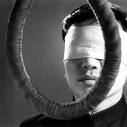
It all starts off when the Korean killer, known only as R (Do-yun Yu), is put to death, but there's a snag when his body is examined: he is still alive. The officials give him the requisite eighteen minutes to expire as the rules apply, but when twenty minutes go by and R is still breathing, they are sent into confusion. Can they hang him again? The Priest (Toshirô Ishido) alleges that he cannot be executed twice for the same crime - something to do with his soul having left the body and R being a different incarnation of himself now. It sounds like a muddle, but turns out to be what the whole plot hinges on, especially as the trauma has sent the convict into a state of amnesia.
Without his guilt, the officials discover they cannot in all conscience "kill" him once more, so some of them have the bright idea of making him remember what he has done so they can complete the sentence. R is reluctant to go through with this, mainly because he is in a daze and doesn't understand what is going on, so black comedy is implemented by Oshima as around him his crimes are re-enacted for his benefit. At least it starts out as humorous, but eventually the film strips away the gags to get at a truth about the state authorising death, and R's criminal acts, of which we are never allowed to forget their seriousness, are presented as revenge against Japan for their social crimes involving Korea.
What's the difference between R's killing of two Japanese girls and the officials "legal" killing of their opposing Korean soldiers during the war? And for that matter, their killing of R now? If anything works against the theorising here it is that Oshima becomes a little too specific in his examples to argue his point, basing his film on a true case, although that did not end with the prisoner surviving - and sometimes we're not too sure that R has survived either, as the drama grows ever more surreal. Soon we are seeing the officials taking part in the crimes to jog R's memory, and doing so with troubling gusto, then one of the victims (Akiko Koyama) is seen lying dead in the building, only not by everyone present, and she awakens to transform into a composite of R's sister (who might not even exist), the victims, and the lover he wanted but never had. All this sounds like a mishmash, yet while it may be too Japan-centric for outsiders, foreigners can nevertheless understand his concerns. Music by Hikaru Hayashi.




 Display comments