Japan’s cult movie wizard Seijun Suzuki proves he can still surprise with this pop musical fairytale. Tanuki are shape-shifting raccoon spirits from Japanese folklore, who often assume human form. Perhaps their most celebrated cinematic incarnation was Studio Ghibli’s satirical anime Pom Poko (1994), although Tanuki-Goten (“Princess Raccoon”) is an oft-filmed romantic legend. Where Suzuki’s version differs is in revelling in its theatrical artifice with gloriously surreal sets and extravagant animated backdrops, and a wide-ranging musical melange that encompasses not just a lovely orchestral score and traditional Enka ballads, but pop, rap, calypso, Broadway melodies, ballet and kick ass rock. Think Moulin Rouge (2001) meets Kwaidan (1964).
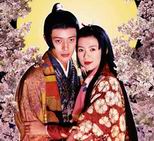
At creepy castle Garasa, vain feudal lord Azuki Momoyama (Mikijiro Hira) goes ape when his rapping, Christianity-practicing Witch (Saori Yuki) reveals he is no longer “the most beautiful person in the world.” That title now belongs to his handsome son, Prince Amechiyo (Jo Odagiri). Putting a gender spin on Snow White, Azuki commands his faithful ninja to murder Amechiyo. Ambushed in the "Crackle Snap forest", the prince is saved by the timely arrival of Princess Raccoon (Ziyi Zhang), who - in an enchanting visual coup - emerges through a painted waterfall. Back at Raccoon Palace, the party-loving, calypso-singing Tanuki are ready to cook Amechiyo, since mortal flesh is a cure for all ills in the spirit world, until they discover he and their princess are deeply in love. But since evil Azuki won’t rest until they are both dead, the lovers’ last hope for happiness lies in a quest for the mystical Frog of Paradise.
Princess Raccoon can initially seem bewildering, especially for anyone not au fait with J-pop culture, folklore or cinema Suzuki. Not for nothing did this legendary iconoclast draw comparisons with Vincente Minnelli, Frank Tashlin and Jean-Luc Godard during his 1960s heyday, regularly reworking rote gangster scenarios into rainbow-hued riots of subversive wit and post-modernist fantasy.
A Suzuki action-thriller was as likely to feature singing hit men, kitsch costumed showgirls, a villain dressed like Zorro, a detective with magic ruby slippers and strange, dreamlike narratives as grimacing tough guys doling out ultra-violence, and when he pushed the boat out too far with the nightmarish Branded to Kill (1967), Nikkatsu Studios gave him the chop. Following a disastrous comeback with Story of Grief and Sorrow (1977), which concerns a female pro-golfer stalked by an obsessive fan, and his award-winning masterworks Zigeunerweisen (1980) and Mirage Theatre (1981), Suzuki’s output has been sporadic but no less innovative.
Here he takes to the musical genre like an old hand, wielding vast studio resources as his private paint box. As in Moulin Rouge, a very slight story plays second fiddle to the surreal dance routines and jaw-dropping visuals. Those expecting a logical, linear film experience will be left floundering. One needs to surrender to Suzuki’s grandiose absurdity: living calligraphy, a magical rowboat ride down ink drawn waves, animated folk paintings, theatrical sets that mix ballet, Broadway and Noh theatre and sometimes morph into location footage and back again, and cartoon sight gags with an all-singing, all-dancing cast of gods, heroes and monsters who frequently break the fourth wall. Is it mere artifice for its own sake? Far from it.
Although some of his satirical attacks upon Christianity (a wicked witch invokes the Holy Virgin for black magic rituals?) and European colonialism (note the wine-quaffing fops attending Azuki’s court) get a little esoteric, Suzuki is hugely ambitious in weaving extravagant layers of symbolism that suggest links between pagan ritual and pop culture, human foibles and a universe in constant flux with heroes that shape-shift from bouncing balls to computer generated bats. A subversive wit permeates proceedings as when a magical duel ends in stalemate until resolved with a game of paper, rock and scissors.
As the porcelain doll at the centre of this abundant toy box of delights, Ziyi Zhang captures the manic, playful spirit of the Tanuki. Speaking both Mandarin and snippets of Japanese, she sings like an angel, performs a nifty tap dance or two in her zori sandals, and even rides a flying cloud zapping death rays at bad guys. Now that’s range. Plus she looks incredibly sexy in her white gauze dress and array of candy-coloured kimonos, which is always worth mentioning.
Making a welcome return to the big screen is Hiroko Yakushimaru, the biggest teen idol of the 1980s in blockbusters like Detective Story (1983) and Legend of Eight Samurai (1984), who plays Tanuki handmaiden Lady Hagi. In her role as the princess’ guardian, she entraps the witch in a spray of multicoloured ribbons and sings a serious catchy Enka ballad about how “mankind is horrible epidemic” - alongside an adorable trio of little Tanuki girls. Perhaps the most surprising cameo comes from legendary Enka balladeer Hibari Misora (who passed away in 1989). Appearing as an astonishingly lifelike CG creation performing her spine-tingling hit song “Like a River Run.”
Overlong and with a silly subplot about a ninja trapped by villagers who mistake him for a Tanuki, this remains full of moments to marvel at and warm the heart. Plus it has a transcendental climax with a shows-stopping calypso chorus line. What more do you want from a musical?
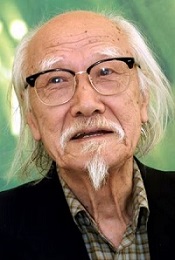
A true rebel in the system, Seijun Suzuki marked out his distinctive style by taking a pop art approach to the gangster cliches he was ordered to make for the Nikkatsu studio, such as Youth of the Beast, Gate of Flesh, Tokyo Drifter and Branded to Kill, but he eventually fell out with them over his wild visuals and spent a decade in the wilderness of television and the independents before he was rediscovered in the late seventies. He was making films into his eighties, with Pistol Opera and Princess Racoon winning acclaim in the 21st century.