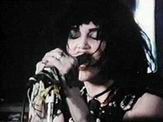
This a document of the Los Angeles punk rock scene as recorded from December 1979 to May 1980. It opens with a fan of the bands telling us why he enjoys it so much, but having trouble defining what exactly his admiration amounts to. Then we see the lead singers of the bands reading out a warning to their audience at a gig that this performance will be filmed and their likenesses may well be used in a forthcoming production, which they are: images of bodies in collision as the music drvies them into a frenzy where it's impossible to tell whether they're dancing or fighting - or both.
Unlike rock and roll in the fifties, punk rock did not have many fictional films to frame their tunes, as the preferred method of portraying their scene was the documentary. Along with the likes of D.O.A. and The Punk Rock Movie, possiby the most famous of these was The Decline of Western Civilization, the superbly-titled effort from fan-turned-filmmaker Penelope Spheeris, who would return to the subject of music again and again over the coming years. Many of these bands featured would reach their widest audience through this, either because they split up soon after, or simply because this was only going to appeal to a niche market.
Outsiders coming to this movie innocently might hear this raw, angry music and not wish to continue any further, but actually for many of those shown there is an intelligence at work behind the snarling, blaring guitars and driving drumbeats. Although you might expect the film to be preaching to the choir, there are interviews interspersed with the songs that attempt to explain the appeal of this movement, and if they never became as popular as the British version of punk, then this remains a valuable look at what it was like to go and see them.
The cameras take a audience eye's view, either jostled around in the bear pit of the crowd, or looking up at the band members as they power through their greatest hits, leaving an invigorating sense of the excitement these people generated, even if you didn't like their sounds. But perhaps the interviews are most revealing for those wishing to understand this, with articulate and wry conversations with the likes of John Doe (while tattooing is going on) and the various members of Black Flag as they hang out in their converted church, to the less sharp opinions of Danny Crash of the Germs, who details his onstage injuries with stoned oblivion: he died of an overdose a few months after this film was shot.
Some of the bands Spheeris doesn't talk to at all, whether because they refused or whether they were cut for running time reasons is unclear, which is a pity in the case of Lee Ving from Fear, because the manner in which he enrages the crowd by continually asking them of they're homosexuals is very funny, even if it does spark off a near-riot down the front. The violence inherent in the scene is not glossed over, and a few of the fans are quizzed as well, in black and white footage, but they have few answers to why punch-ups occur with such regularity other than they all have a lot of energy and they need to channel it somehow. There's a nod towards "society is to blame" thinking, but Spheeris doesn't become too heavy handed, preferring to let the music speak for itself. A time capsule this may be, but it still has echoes in further extreme and would-be extreme groups of the years since.