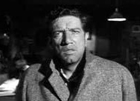
Businessman Robert Kraft (Richard Boone) is reluctant to take over the running of the company cemetery, and when he mistakenly puts black pins instead of white pins into the plan of the place, to denote plots that have been filled by their owners, he discovers that those previously living owners are turning up dead. Could it be that Kraft has the power to cause the deaths of those people who haven't been buried yet?
Co-producer Louis Garfinkle scripted this rare attempt at straight Hollywood horror from the 1950s. In an era when most American fantasy films were concerned with bright, shiny science fiction, it's good too see someone having a go at an old fashioned slice of macabre, and not one that tried to emulate the British Hammer films that were gaining popularity at the time. But that good faith only goes so far...
The premise behind I Bury The Living is at once a great idea and a terrible idea. It's great because of its simplicity, and its way of conjuring up an atmosphere of dread. It's terrible because all Kraft has to do to prevent people dying is not to put any black pins in the map - in fact, stay away from the map altogether! Get someone else to do it! All the way through Kraft is goaded by unbelievers, "Go on, Bob, stick a pin in! There's nothing to be afraid of!" but all he needed to do was say "no!" and his problems would be over.
Boone doesn't give a terrific performance here, but the closeups of his dour, lumpy features impart a sense of a man with a huge weight of guilt on his shoulders. The only person who will believe him is the gravedigger Andy McKee (Theodore Bikel with a strange "Scottish" accent), but, unusually, after about five deaths the police start to believe him too. We find out why at the end, with a twist in the tale which is a real letdown, especially after Kraft has stuck white pins into filled plots and we see the earth over the graves being disturbed. It's a pity, I'd have liked to have seen a 1950s zombie movie. Music by Gerald Fried.
American director, writer and producer of low budget movies who worked internationally. Early films like I Bury The Living and Face of Fire gave way to spaghetti westerns, science fiction and horrors like Zoltan, Hound of Dracula and Ghoulies II. His son, Charles Band, also went into the business with Albert's assistance - he set up Empire Pictures which helped to keep the video stores stocked in the eighties and nineties.