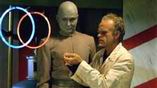
World War Three only took forty eight hours to fight, but its effects were devastating. Humanity found that after exposure to the radiation, the survivors struggling to build society anew had their ability to reproduce severely curtailed. The solution was to build robots, clunky ones at first, but as the technology advanced they became more mobile and their computer brains were able to surpass their creator's. Soon the most humanoid robots so far have been manufactured, but they are put out at their second class ciitzen status - so what will they do?
They will revolt, that's what they will do, only they won't do it using violence (not much, anyway), what they will implement here is talk and plenty of it. Creation of the Humanoids won some infamy as one of Andy Warhol's favourite films, before The Other Side of Midnight came along, at least, and there's something in the stilted playing and the way in which the viewer can read acres of meaning (well, up to a point, anyway) into the blankly presented allegories here that makes it easy to see what the celebrated pop artist would find to enjoy about it.
As for everyone else, the film may last around an hour and a quarter, but it feels like three times that thanks to near-incessant chit-chat. This is about ninety-nine percent dialogue and one percent action, leaving the impression of sitting in the stalls of a high concept play, admiring the colourful, way out sets and wondering when the interval will occur. Our main character is Craigis (Don Megowan) who is very much against the proliferation of the robots and has attained quite a high rank in the so-called Order of Flesh and Blood, which is dedicated to keeping the machines down.
What those humanoids do is eschew their curious, blue-grey appearance and eerily reflective eyes and set about improving - upgrading, if you like - themselves. With the help of a professor (Don Doolittle) they render some experimental models indistinguishable from the real thing - unless they are damaged, in which case they bleed green blood, which is something of a giveaway. This plot is uncovered, but to Craigis's horror the rights for humanoids lobby are gathering apace and even his sister (Frances McCann, who would be murdered the next year) has taken a robot for a lover.
The none-too-subtle allusions here are to American racism and how the more bigoted whites kept the blacks subjugated until the human rights pressure groups and community leaders put a stop to it. Therefore Creation of the Humamoids can be read as a story adapted from then-current news stories, where the mechanical men are really no different from the non-mechanical ones, so they all can live happily ever after, even Craigis. It's all terribly earnest, but played with such an obliviousness to how creaky it all is that the film achieves a weird dreamlike tone which can easily put those whose minds are wandering into a doze. It ends with a twist that if you have been following the metaphors is all too logical, but if you can admire the sentiments, it's hard to get excited about. Music consists of weird electronic noises - all the way through.