| |
House That Screamed, The
|
|
| Year: |
1969
|
|
Director: |
Narciso Ibáñez Serrador
|
| Stars: |
Lilli Palmer, Christina Galbó, John Moulder-Brown, Mary Maude, Cándida Losada, Tómas Blanco, Pauline Challoner, Teresa Hurtado, Conchita Paredes, Víctor Israel, María José Valero, Ana Mariá Pol, Blanca Sendino, Paloma Pagés, Sofia Casares, Maribel Martín
|
| Genre: |
Horror, Thriller |
| Rating: |
  7 (from 1 vote) 7 (from 1 vote) |
| Review: |
Theresa (Christina Galbó) is taken to a French finishing school by her guardian, who in place of her parents is unwilling to look after her any longer and wants her off his hands. They are given a tour of the establishment by its head, Mme Fourneau (Lilli Palmer), and Theresa is made to feel welcome, especially after her fees have been paid in advance, but what was that hand she saw pressed up against a pane of glass over one of the doors? Could it be there is a Peeping Tom about, spying on the girls? And exactly how safe is she - are there really runaways as her fellow pupils attest?
Repression is the order of the day in The House That Screamed, also known as La Residencia, Narciso Ibáñez Serrador's period horror which some have noticed resembles Dario Argento's later shocker, Suspiria. However, this is a far lower key work, with the seething passions of the characters only intermittently bubbling up to erupt into intense sequences, some of which include murders. Serrador also wrote the script, and British viewers of a certain age may note the similarity between the early stages of this and the kind of stories you would find between the pages of Bunty comic.
Of course, later on it gets more like the cruelties of Mandy comic, or even the chills of Misty, but there's really only one significant male character here, and he is the tolerated son of Mme Fourneau, Luis (John Moulder-Brown, adding to the list of cult movies featured in his early career). The reason he is not so popular is that he may well be the Peeping Tom, and with his mother drumming it into him that none of these young ladies he is surrounded by is right for him, is it any wonder he is growing up confused? However, he does have one fan.
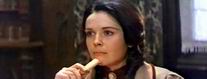
She is Isabelle (Maribel Martín), and she meets Luis secretly for, erm, cake-eating in a cupboard. In addition, there is reason to be suspicious of some of the other girls who willingly assist Mme Fourneau in her drive to ensure that the strict regime is stuck to, with whippings the punishment for failing to comply. It is no surprise these girls are mixed up, but after forty minutes of this you may be wondering if this is actually a horror film at all: sure, it has the chiller atmosphere thanks to a prowling camera and some extravagant set design, but nobody has been murdered yet.
Rest assured, halfway through there's a curiously poignantly-filmed demise for one of the students, and if there's a distinctive quality about this film its how sympathetic it is towards both the victims and potential victims. When one is murdered, everyone thinks that she, like the others, has run away, which is not simply convenient for the killer, but believable when you see the oppression being implemented in the school, by the bullies as well as the teachers. Serrador makes it plain that this is all due to the sexual sides of their personalities struggling to be expressed, and the girls even have to take showers with their nightgowns on lest they be inappropriately aroused. You will probably be able to spot the killer when you catch them out in a lie, but this is impressively handled nonetheless. Music by Waldo de los Ríos.
|
| Reviewer: |
Graeme Clark
|
| |
|
|


