Letty (Lillian Gish) is a young woman travelling from Virginia to stay with her cousin Beverly (Edward Earle) in Texas, and on her train journey she is alarmed by the strong winds blowing up from the plains, not least when a gust covers the food in her lap with sand. She has been noticed by Wirt Roddy (Montagu Love), a local rancher who is in the same carriage, and he ventures over and closes the window, fetching more food for her. Roddy warns Letty that the wind can be very intimidating for those not used to it, but she doesn't think it will bother her, she is simply looking forward to seeing her cousin; she is about to be taught an awful lesson...
Lillian Gish's final silent film was this classic from the distinguished Swedish director Victor Sjöström, and in many ways was a pet project for the star, although she might have regretted her enthusiasm for it when she and the rest of the cast and crew reached the desert location and found themselves suffering in the scorching heat and the lacerating force of the wind that had to be created for dramatic effect. It was scripted by the much-respected Frances Marion and some have speculated that this is one of the reasons the central character of Letty is so sympathetically portrayed.
It's a valid point, but this is Gish's film all the way. Poor, lonely and virginal Letty was perhaps her greatest role, and the vulnerability she expresses is absolutely heartbreaking as you watch her hopes and dreams cruelly dashed by people who either don't want her there, or simply wish to exploit her. When she arrives at Beverly's home he is delighted to see her, although he is still suffering from a lung condition and to make matters worse his wife Cora (Dorothy Cumming) is rabidly jealous of how close Letty is to her spouse, meaing that she doesn't want Letty to stay.
Cora doesn't have much choice, but then she sees an opportunity to be rid of her when two suitors for the girl start pestering her: the older Sourdough (William Ormalond) and the younger Lige (Lars Hanson), neither of whom she is really interested in. But when Cora throws her out, she has no choice and is won by Lige by flipping a coin - the humiliation! And when he tries to force himself on her on their wedding night, she struggles and shoves him away, disgusted, but unusually he is shocked enough to leave her alone and pledge to find enough money to send her back to Virginia. Not everyone will be so kind.
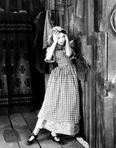
So maybe Lige is not such a bad chap after all, but Letty still has that wind to contend with. The sequences where it hits the characters are presented as if the force of nature were the monster in a horror movie, and the so-called "norther" is the worst of all. This arrives in the film's most famous part, where Letty is left alone and going steadily, hopelessly insane as the wind howls around the home and as if that were not bad enough Roddy turns up again, meaning to rape her (it transpired that he had a wife already, so he is patently a scoundrel). Through it all Gish holds the drama together as Letty in turn falls apart, fashioning a tale both relentlessly tragic and full of panicky tension; if it's only the tacked on happy ending insisted on by the studio that hits a false note, you can easily ignore that, for nevertheless The Wind was a deeply impressive achievement, one of the finest silent films.




 9 (from 2 votes)