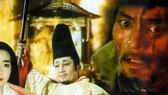
In 14th century Japan, a despotic feudal lord (Kinnosuke Nakamura) grows obsessed with the afterlife, following a battle in which many of his soldiers are killed. He commissions the royal artists to paint a mural of hell, but is soon enraged by their lack of imagination. The lord hears of an amazing Korean painter (Tatsuya Nakadai), whose near-supernatural talent translates the emotions of others onto his canvas, but he refuses to work for such a cruel patron. So the lord kidnaps his precious daughter (Yoko Naito), forcing him to create a masterpiece in exchange for her safe return. Worse, he begins torturing her in front of the artist, in order to heighten the emotional intensity of his work. The painter retaliates by basing his concept of Hell upon the lord’s reign of tyranny.
This historical horror film features a strong concept, not dissimilar from that of Pupi Avati’s revered giallo The House With The Windows That Laughed (1976), and attempts bold statements about art and politics that reflect the era in which it was made. Racial abuse suffered by Korean immigrants, the resurgence of right wing politics, and student protests against the war in Vietnam were hot topics in Japanese cinema at the time, particularly the films of Nagisa Oshima. It is unusual and exciting to see such themes being tackled in a period ghost story. What’s more, the lavish sets, painterly cinematography (somewhat compromised by the lousy transfer featured in Artsmagic’s region 2 DVD), and the presence of Tatsuya Nakadai, Japan’s most respected theatre actor, all suggest this is more than your average horror movie. Yet for all these vaunted ambitions, director Shiro Toyoda shoots himself in the foot almost right off the bat.
For the premise to work, Nakadai’s painter should be a sympathetic figure, emblematic of an oppressed people. Instead, and inexplicably, he is a dangerous psychotic even before seeing his daughter tortured. Within hours of receiving his commission, he flings a poisonous snake upon a peasant boy and sketches his terror and slow, agonised death throes while psychedelic rock thrashes the soundtrack. Several times he actually goads the lord into further acts of cruelty, seemingly oblivious to the consequences for his beloved daughter. She emerges as the film’s only sympathetic character, but Toyoda seems to relish inflicting ever more humiliating tortures upon the once-cheerful, resilient girl. Japanese liberal idealism took a battering in the late sixties, as right wing politicians hired yakuza thugs to disrupt student rallies, infiltrate unions and even murder social reformers. The response by many liberal filmmakers was to wallow in misery and self-pity, often in the form of cinematic rape and torture inflicted upon young women - representations of new Japan (i.e. Koji Wakamatsu’s films, The Joys of Torture series, etc.).
Nakadai’s painter greets his daughter’s violations with no discernable sense of outrage beyond a world-weary shrug, and yet Toyoda still upholds him as the artistic conscience. This muddled morality undercuts any political points the film tries to make and the climax, wherein the portrait takes on supernatural life to overwhelm the hapless lord, comes across as trite.