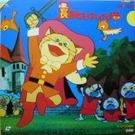
Based very loosely on Charles Perrault’s fairytale, this Toei anime fantasy is as beloved by Japanese audiences as The Jungle Book (1967) is in the West. Perrault (spelled ‘Pero’ in the subtitles, which scuppers the in-joke) is a swashbuckling musketeer cat, on the run from his fellow felines after committing the ultimate crime: rescuing mice. Pursued by a trio of klutzy ninja cats, the wily rogue befriends poor peasant boy Pierre and helps him pose as the Marquis of Carabas to woo the beautiful Princess Rosa. However, the demon prince Lucifer has set his sights on Rosa and kidnaps her to his nightmare castle. Perrault, Pierre and their crack squad of soldier mice set off to rescue Rosa and face deadly traps, sneaky spells and Lucifer’s amazing powers of transformation, while those naughty ninja cats keep up the chase.
During the late sixties and early seventies, animated features for children fell into decline in the West, but in Japan it was a golden age. The delightful Puss ’n Boots combines Disney storytelling with Warner Bros. humour and proved such a colossal hit for Toei they adopted Perrault as their Mickey Mouse-style corporate symbol. “Swift to pass judgement! He is a distinguished cat!” go the lyrics to Seichiro Uno’s bouncy musical score. Perrault emerges a lovable rogue - a boy’s best friend multiplied tenfold. “Life needs to be fun! The world is a vast place!” he tells Pierre before leading him off on a madcap adventure, while millions of Japanese children dreamed of tagging along. Originally intended as a television series, director Kimio Yabuki inherited a team of animators fresh off the studio’s most ambitious project - Isao Takahata’s The Little Norse Prince (1968) - including Hayao Miyazaki who animated most of Puss ’n Boots’ action scenes. The packaging for Diskotek’s region 1 DVD plays up Miyazaki’s involvement, but the guiding light was actually legendary animator Yasuji Mori. Mori’s touch is apparent in the fluid animation, vibrant colours and whimsical character quirks (Perrault’s whiskers unfurl whenever he has a great idea; a little cat makes the sign of the cross when he thinks he’s going to die). However, even as a lower ranked animator the artistically ambitious Miyazaki made his presence felt (note the chase through Lucifer’s crumbling castle - a clear precursor to the climax of Castle of Cagliostro (1979)). Mori and Miyazaki’s diverse styles result in some daring visual experiments, the most celebrated of which amongst anime buffs is Lucifer’s myriad transformations into an elephant, hippo, lion and finally a horrible, three-headed dragon. Even more impressive is the finale where Pierre and Rosa dive off the parapet in time to catch sunrays that will turn Lucifer to stone. Here the animators utilize jump cuts and subliminal frames showing the rising sun and push a children’s fantasy adventure into something audaciously abstract.
Perrault returned with acclaimed anime director Tomoharu Katsumata at the helm for Three Musketeers in Boots (1972), while Hiroshi Shidara took the director’s chair for the final sequel Puss n' Boots Travels Around the World in 80 Days (1976). These films established a winning formula for Toei throughout the seventies and early eighties, spawning many classics until the studio ditched fairytales to hitch a ride on the sci-fi boom.