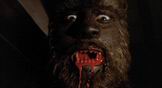
Heroic knight Waldemar Daninsky (Jacinto Molina, aka Paul Naschy) wipes out a witches’ coven led by infamous Satan worshipper Elisabeth Bathory. Centuries later, her descendents dispatch a temptress (Maritza Olivares) to seduce and place a curse upon Daninsky’s heir (also Naschy), transforming him into – madre de dios! – El Hombre Lobo! The wicked werewolf goes on a killing spree, which brings townsfolk added misery since they already have a psycho-killer out doing the same thing. Meanwhile, two lovely sisters arrive in town and catch our tragic hero’s eye. Daninsky pursues a star-crossed romance with chaste, virtuous Inga (Fay Falcon), which doesn’t stop him getting busy with cute, flirty Maria on the side. Naturally, Maria pays the price for being nude eye-candy in a Hispanic horror flick – she becomes wolf chow. A remorseful Daninsky tells Inga he’s the lycanthropic murderer (But doesn’t mention his infidelity. Classy guy, huh?), and she sets out to save his tortured soul.
This seventh instalment of actor/screenwriter Paul Naschy’s El Hombre Lobo series abandons the contemporary settings of his last two adventures for a 19th century set prequel. The film has its admirers, but lacks the dreamy ambience of 1970’s superior Werewolf Shadow or the “swinging London” outrageousness of Dr. Jekyll vs. the Werewolf (1971) – both directed by Leon Klimovsky. Carlos Aured was a former assistant to Klimovsky and collaborated four times with Naschy, most notably on Horror Rises from the Tomb (1972). The pair eventually fell out because of, Naschy claims, Aured’s “professional jealousies”. Not the most emotive of actors, Naschy remains sincere and as screenwriter musters a heady atmosphere of romantic tragedy. He understands the ingredients for a good exploitation picture. Sleaze fans will relish abundant gore, violence, nudity and scenes of satanic copulation, but Aured fumbles the werewolf attacks with awkward, lethargic staging. Too many superfluous subplots muddy the waters: the escaped maniac, Inga’s blind mother and her supernatural sense of foreboding, and the potentially interesting relationship between Daninsky and his housekeeper (who covers up his murders).
Even the witches disappear from the story too early on, after Daninsky’s first love falls victim to the maniac. The superstitious, murderous peasants are a loathsome bunch, more so than the tragic monster. Daninsky is essentially a benevolent man trapped in a cyclical tragedy, while Naschy’s screenplay avoids scream queen clichés making Inga a strong-willed, rational heroine who fights for her man. However, the free-spirited sexuality of Werewolf Shadow is replaced with sexual hypocrisy, regarding how Maria is treated. A specific fear of female sexuality (“He is a man after all” remarks one manservant of Daninsky’s libido) keeps the housekeeper suspicious of every woman in Daninsky’s life, and the hypocritical tone sullies the exploitation thrills. Naschy brought the series back on track with comic book energy for The Werewolf and the Yeti (1975), and went on to direct one of its finest entries: Return of the Wolfman (1980).