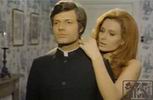
Berlin, 1945: stock footage of bomb raids merge surprisingly well with the sepia toned prologue. A woman gives birth to a devil child, swiftly murdered by its father, nazi aristocrat Baron Von Blumberg. It seems the Blumbergs are cursed, for any daughter born to their family is destined to become a sultry succubus in the service of Satan. Credits play over a spooky, easy listening score that sounds like Burt Bacharach’s evil twin (great stuff from Alessandro Alessandroni). Flash forward sixteen years: a lady photographer snoops around the Baron’s castle, and is murdered by a pitchfork-wielding assailant. Thereafter, a busload of tourists take refuge at the creepy castle. They include the glutinous driver, a handsome priest (Jacques Monseau), a sexy blonde and brunette, an old grouch, and a bickering married couple. A late arrival on the scene is the lovely Lisa (Erika Blanc), who immediately turns heads with her skimpy, navel-baring dress, and has the young priest tormented by impure thoughts. That night, Lisa leads each guest into one of the seven deadly sins, reveals her zombie face and murders them, delivering their souls to Satan (Daniel Emilfork).
Devil’s Nightmare is pure cut and paste exploitation. Wild elements are thrown in (hidden treasure, the baron’s alchemy, his nazi past, animal sacrifice, the murdered photojournalist) for immediate entertainment value then promptly forgotten. It’s the kind of film that stops just so two pretty girls can lounge around in their underwear, get turned on, indulge in some lovingly photographed sex, and then gets back to the horror. Brismée blends stylish sleaze with arty flourishes amidst hazy, dreamlike photography, although the credits list Andre Hunebelle as “artistic supervisor”. Hunebelle directed the sixties’ pop art Fantomas remakes starring Jean Marais, and his sly sense of the sublime is reflected here. The supernatural is depicted with theatrical flair similar to Jean Rollin’s vampire fairytales: Lisa’s spectral presence withers roses, short circuits a phone, and magically disappears and reappears in various guises. While Emilfork’s devil is genuinely creepy (The actor later starred in Jean-Pierre Jeunet and Marc Caro’s magnificent City of Lost Children (1995)), the other supporting characters are caricatures, only too eager to sin. The metaphysical debate ends up one-sided since Monseau’s priest has the charisma of a wet whelk.
It remains Erika Blanc’s show all the way. Wide-eyed with glee, the flame-haired bombshell materializes in a succession of sexy outfits, tempting characters to their deaths. The actress (whose real name is Enrica Bianchi Colombatto) possesses a unique beauty, able to appear deadly or desirable depending how she is photographed. She even expresses moments of sorrow amidst the murders, so we’re never entirely sure whether Lisa is a tragic monster or malicious minx. It’s a performance above and beyond the call of duty for a low-budget exploitation picture, and even elevates the silly ending, which otherwise makes little sense. Sure, Satan may get his man in the end, but Blanc’s enigmatic smile suggests poor, rejected Lisa finally finds someplace to belong along with unconditional love. Okay, maybe that’s reading too much into trashy horror film, but Erika Blanc really makes this too delicious to be dismissed as camp.