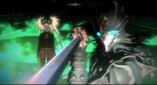
This second instalment of a two-part anime epic might seem incomprehensible to anyone who hasn’t watched Karas: The Prophecy (2005) first. That said, hardened anime viewers are accustomed to being hurled into the middle of a story, with characters we barely get to know amidst a breakneck pace. As with many anime, it may take repeated viewings to understand the plot, but the emotional and subtextual impact is surprisingly immediate. In a future Tokyo where human and demon worlds overlap, white haired, supernatural minx Yuri protects the city alongside her latest protégé, a wisecracking, Christina Aguilera look-alike able to become a metallic, transforming superhero, or Karas. The evil Eko (Matthew Lillard in the English dub), an ex-Karas turned bad, leads a group of mechanized demons in an attack against the human race, while Yuri’s original Karas (Jay Hernandez) has lost his fighting spirit. Our modern day samurai tries to lay low, but is drawn into scraps with ghosts, monsters and yakuza gangs (including his own father). Meanwhile, sub-plots feature various, likeable human characters reeling from encounters with the supernatural: a kindly detective, a beautiful comatose teenager, a plucky waitress, and an orphaned child.
Tatsunoko Studios is the Marvel Comics of anime. In their Seventies heyday, head honcho Ippei Kuri concocted a winning roster of angst ridden superheroes like Casshan: Robot Hunter (1973) and Science Ninja Team: Gatchaman (1972) (Famous in English as Battle of the Planets). Kuri is credited as “story planner” here, while director Sato achieves a striking combination of 2-D animation, computer graphics and even, brief snippets of live action lurking on the peripheries. His storytelling is helter-skelter, but Sato’s animation is beautiful in its fluidity, dazzling with large-scale monster mayhem (buildings wrecked by giant tentacles), John Woo shootouts, and sci-fi transformations straight out of sentai (live action superhero shows). It’s surprisingly more of a character piece with melancholy heroes prone to flashbacks and philosophising. The yakuza sequences have a touch of macho sentiment and homoeroticism reminiscent of Jean Pierre Melville, but sudden deaths and revelations remain hard to follow. Karas is disarmingly frank about Japanese anxieties towards Tokyo. Several characters debate whether life in the city is really worth living. “The will of the city is born through a human soul”, remarks Yuri. The Karas are bound to the city, sworn to protect it in spite of corruption, chaos and occasional intolerance, in a conclusion that displays a pleasing generosity of spirit.
Anime fans that remember the dismal days of English dubbing should appreciate Hernandez and Lillard’s committed line readings, while the delirious finale is especially eye-catching. Eko transforms into a Mecha-Godzilla sized menace, Karas gets his mojo back, and there is a rousing intervention from our Christina Aguilera look-alike and some delightful yokai (Animal spirits from Japanese folklore), who enjoy too little screen time. For all its faults, Karas is more rewarding than a dozen Matrix sequels.