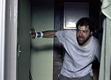
It's just another ordinary day in suburban Los Angeles for newly moved in couple Lexi (Mary McCormack) and Brad (Rory Cochrane), and Brad wakes his wife with a cup of coffee prepared the way she likes it before she has to shower, get dressed and leave for work. Musician Brad is effectively Lexi's house husband, staying at home while she goes out as the breadwinner, so when disaster strikes, he doesn't know whether she is all right or not. As he hears over the radio, there have been a series of explosions in the middle of the city and he rushes out to see the smoke billowing into the skyline. So many people are phoning each other that the network goes down, so Brad has no way of finding out if his wife has survived, but when the news comes on that the explosives were "dirty bombs" and therefore turning the atmosphere toxic, he has to seal himself off and pray that Lexi has escaped the worst of it.
We now know that so called the deadly effects of "dirty bombs" were exaggerated, and any radiocative or poisonous fumes would disperse pretty quickly, meaning that a better bet for any budding terrorists would be to set off as much explosive as possible instead. But with Right At Your Door, this fact is less important than the atmosphere of paranoia that writer and director Chris Gorak opts for, where we only discover as much about the ongoing situation as Brad does, and even then he's entirely reliant on the radio, the television not only unpacked but not picking up any signals either. The location doesn't vary from Brad and Lexi's home after the first twenty minutes or so, adding claustrophobia to the film's list of fears, along with terrorism and infection.
During that first twenty minutes, Brad frantically tries to reach his wife, only to have his path blocked by police, and armed police at that, as he witnesses two officers shoot a man they believe to be contaminated. After stocking up on plastic sheeting and tape, along with a whole load of other panicking citizens doing the same, he is forced to return home and a stranger barges into his kitchen, saying that the door was open. This man is his next door neighbour's handyman (Tony Perez), who, having nowhere else to go, has elected to take cover in Brad's house as the fallout from the bombs begins to drift and settle in the dust outside. And all the while Lexi is unheard from, and Brad has to bluff his way through a phone conversation with her mother, cutting her off before he has to say any more.
First time director Gorak was inspired to make a whole feature from a fragment of script he wrote, and it shows. The most potent idea is not, perhaps unexpectedly, the dread of being caught in a terrorist outrage, but what happens when Lexi makes her appearance. Does Brad let her in and contaminate himself and the handyman, after they have sealed all the doors and windows? Or does he let her stew outside and attempt to allay her fears by saying that help is on its way as her condition deteriorates? This part is the strongest, but elsewhere the film feels padded as we wait to find out what is really going on, and day turns to night. The suspicion of not only the terrorists but the authorities is a very twenty-first century idea, and when the officials do turn up they're gasmask-wearing soldiers obviously inspired by George A. Romero's The Crazies. The final twist bleakly makes the point that if the bad guys don't get you, the good guys will. Music by tomandandy.
[Lion's Gate's DVD has a director's commentary, trailer, an interview with Gorak who also contributes a short, do-it-yourself film school guide.]