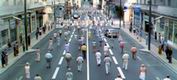
Today seventy million people across the world have returned from the dead. In one French smalltown, just as everywhere else, the authorities are struggling to cope with these new, old arrivals; most of them are over sixty and all have died in the past ten years or so. The town hall is filled to capacity with the returnees as those who have lost loved ones try to track down their relatives, many uncomfortable with the whole idea of the dead coming back, meaning there are those unclaimed. Among those reluctant to see the dead again is Rachel (Géraldine Pailhas) whose husband died a couple of years before and she does her best to avoid the responsibility of meeting with him and taking him back home. But as more is found out about these enigmas, do they have a purpose? Why are they here?
Don't ponder too long over that question, as you may be disappointed with the answer. A zombie movie with a difference, here the undead are not shambling flesh eaters laying seige to various buildings containing the panicking living, but just slightly slow versions of the people they were when they were alive, give or take a few degrees of lower body temperature. Scripted by director Robin Campillo and Brigitte Tijou, the drama is so muted as to create a dreamlike atmosphere which is sustained throughout, and the tension stemming from what exactly the undead are going to do when they get their act together is ever-present.
As the returned to all appearances have conscious minds and are able to communicate, the problem is what to do with them now they're here. Campillo makes sure that they don't say too much for the first half of the film, in keeping with their slightly sinister vagueness but frustrations arise when nobody asks them what it was like to be deceased and what exactly they're back for. One little girl asks her grandmother about it, but she is quickly shushed by her oversensitive mother. The upshot of all this is that the living population are quite happy to accept the state of affairs until one of those frequent council meetings begins to reveal more.
Among Rachel's work colleagues is Isham (Djemel Barek) who has, pretty emotionally, regained his dead son, six years old at the time of his demise. We never hear the boy speak, and although his parents love having him back, he doesn't seem able to reciprocate their affection, in common with the other undead. Except for one, the most intelligent of them who is Mathieu (Jonathan Zaccaï), Rachel's husband, who after initial wariness on her part is warmly received into his home. Although he too cannot explain what is going on to anyone's satisfaction, let alone the audience's, he seems to be breaking the mould of the general pattern of his kind.
What the undead like to do is walk. For an average of nine miles a day they amble around, no matter the age they were when they died, and it is noticed that when they are supposed to be sleeping they are only pretending: architect Mathieu, for example, goes to his work at night, leaving Rachel in the land of Nod. Questions of the power of nostalgia ruling the present or what to do with an ageing population are under the surface, but They Came Back, or Les Revenants as it was known in French, invites interpretations without really pinning anything as mundane as an explanation down. It's not spoiling things to say the undead are planning something, but Campillo prefers to be obscure, making for a haunting experience but one that thwarts any real revelation. Moody music by Jocelyn Pook and Martin Wheeler.