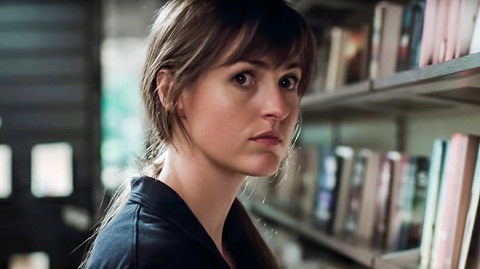
Julie (Renate Reinsve) is nearing thirty and after spending years getting excellent grades and studying to be a surgeon, she finds she didn't want to do that as a career after all. She decides she would prefer to examine people's inner lives, so switches to a psychology course, but the preponderance of fellow students who are suffering borderline eating disorders once again has her reconsidering her options. She changes tracks and decides photography is where her heart lies, and starts turning professional - but really, Julie has become a bookshop assistant, and all those grades were for naught...
A curious kind of romantic comedy, The Worst Person in the World had you bracing yourself for acres of bad behaviour across the space of over two hours, but it did not work out that way. This was because though Julie was flighty, the person she was doing most damage to was herself since she could not settle into any one groove, a common enough predicament in your twenties when you were meant to be making those big decisions about your future. Yet she was approaching her thirties with some speed and still had not made up her mind on the big questions: who will her life partner be? What is her career path?
Being in the service industry when you should be taking advantage of the opportunities life has given you is not exactly shameful, and they provide a steady income as you weigh up your options, but we get the impression Julie will be stuck going nowhere for quite some time to come thanks to her lack of a firm set of guidances and the ability to make up her mind. But this was not a workplace comedy, it was a romantic comedy, and she feels she should be in a relationship, so when Aksel (Anders Danielsen Lie) happens along, she seduces him, Aksel being an underground comic book artist who made the (relative) big time with his projects.
He is forty-five to her twenty-nine, and you might wonder if she wants security from an older, more stable man, and he wants kids, basically. A stay with his extended family leaves Julie feeling like the odd one out for she has no children, and looking at these settled families she is not so sure she wants to do the same, but here we understand the suffocating life choices for women in the twenty-first century and how far they are expected to conform to the mother role. Either that or concentrate on the career, there does not appear to be any more in the way of options, so you can perceive a certain panic in Julie's heart that her chances are limited as to where she can take her existence from birth to school to work to motherhood to death.
Yet the thing is, our heroine was not as all over the place as we are anticipating, as she has a clarity about the strictures she is experiencing. It's not as if she craved nonstop excitement, she just wanted to cut loose every once in a while, and director Joachim Trier allowed her to do so in such sequences as the one where, dissatisfied as usual, she crashes a wedding party and gets to know Eivind (Herbert Nordrum) in an extended meet cute which they both agree should end with that evening. However, they have made such an impression on each other that they prove difficult to dismiss. There were even fantasy sequences, one where everyone except Julie and Eivind stop in time, and another where she has a bizarre trip on magic mushrooms that surreally represented her problems. The trouble with this was, its conclusion that everyone slots into a well-worn set of circumstances eventually was not really a triumphant denouement, and you can leave this feeling deflated after all that. Music by Ola Flottum.