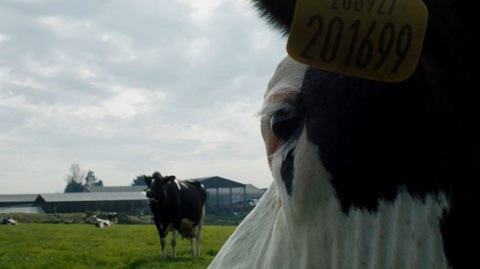
This is Luma, she is a cow on a dairy farm, and she is about to give birth to a calf. The farm workers tie a rope around its hooves and pull it out, untie the rope and give it to its mother to lick clean. Yet while she is allowed to spend some time with her offspring, and suckle it to an extent, the calf will be taken away from her soon enough and bulked up in preparation for its impregnation so it too can become a dairy cow. We will follow these two animals through the course of the years they are alive, until they are no longer able to give milk, or be handled safely, whereupon they will be sold for meat. All the way through this, we are quietly asked, is this the way we want to treat cows that are used for dairy? Do we have a conscience?
Though Georges Franju is often credited with the first real animal rights film, portraying an abattoir in all its bloodletting in France just after the Second World War in Blood of the Beasts, perhaps the biggest influence on all the ethical farming documentaries to come was 1981's The Animals Film, which depicted a range of ways the creatures were exploited for humans, be that vivisection or eating. It was a brutal watch and has shifted many over to the side of vegetarians and vegans, but closer to a horror-themed mondo movie which rubbed the audience's noses in the revolting practices that are employed to keep the agriculture industry moving. But rather than go for shock, in the main director Andrea Arnold preferred restraint, and pluck on the heartstrings that way.
Luma and company are shown to take life as it comes, not especially alarmed by their lot, indeed the most trauma they go through is being separated from their calves, which prompts a lot of plaintive mooing, and eventually, indignant and threatening behaviour that spells their doom. Other than that, the most emotion we witness is when Spring arrives and they are allowed out to graze in the fields; if cows can gambol, these cows are gambolling. We do catch sight (and sound) of people too, vets and farmers who take care of these animals and make sure they go through as little upset as possible, so their tone of voice is kind. Whether you believe their actions are equally kind is very much up to how you regard the food on your plate every day: is the mere ability to make food and drink out of these beasts reason enough to do so?
It was not clear whether Arnold thought she was backing the farmers or the non-meat and dairy consumers, as both could take away positives from this. The cows themselves do not exhibit a lot of personality, so you could not imagine anyone very well having one as a pet, and if they were allowed to go feral they are big enough to provide a menace in the countryside. There's too much investment in this sort of agriculture to be going away any time soon, despite the warnings we have from climate change scientists that cattle farming was harming the planet, and the more hardened carnivore would tell you it was nature's way for the predators (humans) to feed on the prey (cows). Maybe the biggest problem here was that it was unsurprising; the animals may be used for food, but they have a safer life than they would in the wild even if that life is truncated (the film's only genuine shock moment). They are used like part of a machine that happens to be alive, not without compassion, but without sentimentality, and if you can cope with that, the cycle of repetition this details will not trouble you. Although it would be a cliche, maybe a voiceover might have helped in making up minds.